I’ve been thinking about Mum a lot this week. Today would have been her 101st birthday. Yesterday’s 80th anniversary of VE (Victory in Europe) Day also touched me. I know she would have keenly followed the celebrations and had special memories of where she was when she heard the war was over.
So I looked out her diary that she wrote when she was stationed in Jerusalem, with 512 Company, ATS (Auxiliary Territorial Service – the women’s branch of the British Army), between September 1944 and June 1945. I was keen to see her familiar handwriting and read the relevant account of the double celebrations. She did not disappoint.
Her entry for 9 May 1945 was indeed momentous.
Wednesday 9/5/45
My birthday. In my wildest dreams I never realised I would have my 21st birthday in Jerusalem, and then for the war with Germany to be over just before it. Opened my parcel from home and it was such a lovely one. I was just thrilled with the charm bracelet, it’s something I have always wanted. Also received the wool for Ray’s pullover – such nice wool too. Had four cards altogether and a big silver key from Mother and Dad.
Went shopping with Priscilla in the morning. Bought myself a pair of white shoes. Priscilla tried to get a frock – all so expensive and not particularly nice.
Lazed around in the afternoon. Able to leave barracks in civvies, today and tomorrow, so did so to meet Ron. Wore the bracelet and Ray’s brooch. We had dinner at the Café ‘Raman’ and then went to see ‘Song of Russia’ – with Robert Taylor and Susan Peters – the music in it was lovely. But the cinema was so hot – no air at all.
Afterwards had ice cream and a drink in a garden cafe and then walked back to camp. It was a lovely warm night and we had plenty of time to walk back at our ease.
Here is some context and explanation: Mum was newly married to Dad (Ernest Raymond Cockrill known as Ray) who she’d first met on the troop ship HMS Alcantara in September 1944 sailing from Liverpool to Alexandria. He was with the Royal Air Force heading for RAF Heliopolis east of Cairo. Following a whirlwind romance they were married at Christ Church in Jerusalem’s Old City on 4 February 1945. She hadn’t seen Dad since their brief honeymoon in Cairo and would not see him again until he returned to the UK in October 1945.
Priscilla was one of her best friends in the ATS who she had known in Northampton where they had first been posted following training in Watford after joining up in 1942. They were both shorthand typists providing admin support to the British Army based at the King David Hotel in Jerusalem. During the British Mandate, the southern wing of the hotel was turned into a British administrative and military headquarters.
Photo: Garden view of the King David Hotel. Built in 1931, Jerusalem’s first luxury hotel, was marketed as the ‘Grand Hotel of Palestine’ and had six floors and boasted 200 rooms. [G. Eric and Edith Matson Photograph Collection. Library of Congress Prints and Photographs Division Washington, D.C. 20540 USA].Photo: view from flat roof of the King David Hotel. Mum remembers she and the other ATS girls often sunbathed on the hotel’s flat roof at lunchtime. It had a commanding view of the Old City and surrounding hills. [G. Eric and Edith Matson Photograph Collection. Library of Congress Prints and Photographs Division Washington, D.C. 20540 USA].
The day before, on 8 May (officially Victory in Europe or VE day) Priscilla and Mum had tea at St Andrew’s Scots Memorial Church (the local Scottish Presbyterian church built to commemorate the Scottish soldiers who fought in Palestine during WW1 and which had a popular social club). Mum then recalls going with Priscilla to watch the Beating of the Retreat (the traditional British Army ceremony that signifies the end of the work day) by the Pipes of the Gordon Highlanders outside King David Hotel before going to have her ‘first drink to celebrate’ in Priscilla’s office. They then got a taxi ‘back to camp’. This was the British Army’s Allenby Barracks. Mum noted that ‘Everywhere is decorated – flags and Vs on all the buildings.’
Illustration: Guide Map of Jerusalem, Survey of Palestine, 1945. Original black and red printed map. You can see Allenby Barracks, King David Hotel, Christ Church and St Andrew’s Church here
Ron was a male army friend she often talked about who was part of their regular group of friends. ‘Civvies’ were civilian clothes as opposed to uniform. Mum’s uniform consisted of a khaki skirt and belted tunic of wool serge over a lighter khaki shirt, khaki lace-up brown service shoes and somewhat unflattering thick beige lisle stockings. However, it appears from photos that they were sometimes allowed to wear short socks and not wear the tunic jacket, due to the stifling heat (to which Mum often referred).
Photo: Mum in full ATS uniform complete with the twisted cord lanyard on her right shoulder wearing a side cap as well as her army-issue handbag. Pictured somewhere in Jerusalem (outside the King David Hotel?, in late 1944 or early 1945.
Mum seemed to spend her down time going to films or dances, as well as cafes and clubs for tea, dinner or just drinks or icecream. She and her friends walked, hitched lifts or took buses, taxis or gharries (horse drawn vehicles). I can imagine she would have loved Song of Russia that she saw on her birthday as it heavily featured the music of Tchaikovsky, one of her favourite composers.
Illustration: promotional poster for MGM’s Song of Russia. It was popular but schmalzy by today’s standards and certainly didn’t accurately portray Soviet peasantry.
Song of Russia was a 1944 American war film made and distributed by Metro-Goldwyn-Mayer. It told the story of American conductor John Meredith who embarked on a journey to Russia with his manager for a country-wide tour. He falls for a beautiful Soviet pianist Nadya and the couple end up in the middle of the Nazi invasion. It was in fact a pro-Soviet propaganda film, designed to raise the awareness of the American public regarding Russia’s fight against Nazi Germany.You can see and hear the original trailer here.
‘Mother and Dad’ were my grandparents Annie and Sydney Betts, then living above the railway station in Chelmsford, Essex where Sydney had been appointed stationmaster, following a promotion in March 1944. Prior to that, since 1940, he had been at Whittlesey, the then small Cambridgeshire market town near Peterborough. A barometer, one of our family heirlooms, had been the leaving gift presented to him at his sendoff at Whittlesey.
Mum was a keen knitter as was my grandmother. She bought some steel knitting needles in Jerusalem and was aghast that they cost 3/9d (about 3 times the price in the UK at the time). ‘What a price! she wrote and I can hear her saying it! She notes in a diary entry later in May that she ’knitted most of the afternoon – want to finish Ray’s pullover before I leave here … Got into bed directly after supper and continued knitting – felt quite a grandmother!’
Little did she know then that she would later become both a grandmother and great grandmother … and carry on knitting.
Victory celebrations had actually started in Jerusalem on the 7th. But Mum was unable to join in. She was in bed with a very sore throat that had been painted with iodine. ‘This has been a day of days’, she wrote. ‘Fancy being in Sick Bay when the war with Germany is declared over! I don’t think everyone is showed how they felt – I suppose we English are like that, but I know underneath we were rejoicing. It hardly seems true at the moment, but I think everyone feels as I do that we would rejoice all the more if we were at home with our own people. I just long to be with Ray’. And added later, ‘It was maddening to lie in bed that night and to hear everyone celebrating while we could not take part.’ She was in the Sick Bay with one other person – a new girl from the UK who was suffering from a ‘gippy tummy’.
More surprises came within the next few days. She received birthday telegrams from home, from her new mother-in-law (Florence – Florrie – Cockrill) in London, and brother-in-law, (Leslie Cockrill – Les) who was in the Navy (neither of whom she had met); as well as a letter from her mother. And best of all she learnt from those in command that she was going home. She also got a chance to really celebrate. On the day after her birthday, she went with her friends to the barracks’ Victory dance held in the recreational area known as the NAAFI. This stood for the Navy, Army and Airforce Institute, which provided a range of services, including canteens, shops, and other facilities, for military personnel stationed both at home and abroad. It was humorously also said to mean “Never ‘Ave Any Fags In’, due to the frequent shortage of cigarettes.
All the military personnel were allowed to wear civvies for the dance. Mum wrote that she wore ‘my flowered frock and new shoes [the ones she bought on her birthday]. Enjoyed myself very much and everyone was quieter than we expected. Had plenty of dances and cooled off on the verandah where the tables and chairs were set out. About 11 o’clock a bonfire was lit in the Barrack Square and we all danced round it!’
Hope you are dancing up there today, happy heavenly birthday Mum!
Always in my thoughts but especially today. Joan Dorothy Cockrill (née Betts) 1924-2024
Photo: Mum in Arab costume, dressed as married woman taken by a professional photographer in Jerusalem on 29 May 1945 According to her diary, she nearly didn’t attend her booking as she had a ‘gippy tummy’ in the morning but ‘felt better in the afternoon so went along to have my photo taken in the Arab costume – they should be very nice’. The photo was for Dad, to ‘cheer him up’ she always said. At this point in time, Dad was stationed with the RAF at Klagenfurt, in southern Austria along with the Eighth Army, helping to ‘clear up’ after the war. The city, nestled beside the banks of Lake Wörthersee in view of the Alps, was badly damaged having suffered over 40 bombing raids and was also the site of a concentration camp subcamp and a POW camp.
Time to explore a story from my mother’s side of the family which seems appropriate seeing that mum recently celebrated her 99th birthday, in Market Harborough, her home now for almost 35 years.
Market Harborough: the coolest place to live
In 1989, my parents moved from Purley, south of London to Market Harborough, this small Leicestershire market town, close to the Northamptonshire border. After living all their married life in the London area, they chose Market Harborough as their new home because of its relative proximity to my brother and sister and their families. It had been a town we had often driven through when I was at Leicester University, and it had a nice feel to it. It still does although it has expanded considerably since then, becoming a popular town for London commuters. It’s now less than an hour by nonstop train down to St Pancras. And apparently, as of March 2023, it is considered one of the coolest places to live in the UK.
The Symington Building in Market Harborough, now the local council offices, museum and library, but formerly the Symington’s corset factory built in 1889 [Photo: Pauline Cockrill, Nov 2016 CC BY-SA 4.0]
Market Harborough has a few claims to fame: the Liberty bodice, which helped change the way children dressed in the early part of the twentieth century, was invented here at the Symington’s corset factory; Britain’s iconic HP Sauce was once made here (the factory closed down in the mid-1990s but I still remember the all-pervasive pungent, spicy smell wafting over the town when Mum first moved there – Sainsbury’s is now on its original site); and erstwhile woodturner, Thomas Cook (1808-1892) was living and working in Market Harborough in 1841 when he organised a train excursion from Leicester to Loughborough for nearly 500 people for a shilling each. This was to be the very first package tour and led to the establishment of his world-famous (but sadly now no more), Thomas Cook & Son travel agency.
As an aside, I’ve discovered there is even a direct connection with my current hometown, Adelaide in South Australia. An iconic feature of Market Harborough is the 17th century Old Grammar School in the town centre, raised on stilts so that the local farmers’ wives could use the space beneath as their weekly butter market. The school’s most famous former student was William Henry Bragg (1862-1942), who later shared the Nobel Prize for Physics in 1915 with his son Lawrence Bragg for their work on x-ray crystallography. William Bragg had begun his research into X-rays and wireless telegraphy at Adelaide University where he was Professor of Mathematics and Experimental Physics for over two decades from 1885-1908 before returning to the UK. His wife (and Lawrence’s mother) was Gwendoline Todd, the daughter of Sir Charles and Alice Todd (who famously lent her name to Alice Springs, my previous hometown for 12 years). But that’s another story!
Old Grammar School of Market Harborough: a small timber building dating from 1614 and used as a school until 1892. The ground floor is open, creating a covered market area and there is a single room on the first floor. It has become a symbol of the town. [Photo: Immanuel Giel, 2018 CC BY-SA 4.0]Catherwood House, (now Caffé Nero) built by William Bragg in 1875 in Venetian, Neo-Gothic style, near the Memorial Cross on the Square, Market Harborough. It was here his young nephew William Henry Bragg lived with him as a child, and studied at the grammar school across the road. WH Bragg was to later call the house he built in Adelaide, South Australia in 1899, Catherwood House after his childhood home. [Photo: Immanuel Giel, 2018 CC0 1.0]
Let’s return to this story. So it appeared there was no direct connection with our family to Market Harborough. Or so we thought. After delving deeper into my mother’s family history recently, I was amazed to discover that in fact we had relatives who lived, worked, and died there from the early 1900s.
And a reminder again, the family tree can be found here to perhaps make it easier to follow along. If you have trouble accessing it, contact me and I’ll share the link with you.
The Brunnings connection
Let’s set the scene. First, we need to head to East Anglia and count some sheep. Or rather shepherds. There were rather a lot of them in the family.
My maternal grandmother, Nanna Betts was Annie Brunning before she was married and hailed from Suffolk. Her father, mum’s grandfather was Charles Brunning. Although he died in 1930 when Mum was just six years old, she does recall him – a slightly grumpy old man, with a large beard, living at Little Cressingham, a tiny village 8 miles (13 km) south of Swaffham in the Breckland District of Norfolk. The oft-repeated salient detail was that our great grandfather was a shepherd. In fact, Charles was from a family of shepherds, going back at least two generations, possibly more. Born in 1845 in the Suffolk village of Icklingham, 7 miles (about 11 km) northwest of Bury St Edmunds and 9 miles (about 14 km) southwest of Thetford, Charles was one of 14 children – six boys and eight girls. Four of Charles’ five brothers were shepherds like himself, and according to census returns had all begun from a young age, about 10 or 12, as shepherd’s ‘pages’ (young male assistants). Their father, my great great grandfather, Michael Brunning, was also a shepherd and was similarly born and bred in Icklingham.
My great grandfather, Charles Brunning (1845-1930) who mum knew as Grandad Brunning. At home in Little Cressingham, Norfolk, probably around 1929. [Family photo]Mum in Grandad Brunning’s garden in Little Cressingham, Norfolk, c1929. [Family photo]
Counting cousins
Not only did I find myself counting shepherds but also cousins. With her father Charles having so many siblings, it meant that Annie, our Nanna Betts, possessed numerous first cousins on the Brunning side. I’ve calculated at least 40 (there may be more but I was unable to trace the family line of a couple of Charles’ sisters).
Discussing shepherding in 19th century East Anglia can wait for another day. Here I want to focus on just one cousin whose story jumped out at me. He needed further investigation because he not only chose to veer from the well-worn path of shepherding, but he also left Suffolk. George Brunning. Just George. No middle name. Fourteen years older than Nanna Betts, he was born in the Cambridgeshire village of Dullingham on 27 February 1881 to Samuel Brunning and Sarah Ann née Frost. His father Samuel was the younger brother – by five years – of my great grandfather Charles Brunning. Unlike his five brothers and his father who were all shepherds, Samuel was an agricultural labourer who later worked specifically with horses. With my own love of horses, this was another aspect that caught my eye. At the time of his son George’s baptism on 16 June 1881, Samuel is described as a horse keeper, and is still so by the time of the 1891 census. In that year we find him lodging with the Fuller family, at Wickhambrook, Suffolk, a village about 10 miles (16km) southwest of Bury St Edmunds. But where was his son George, Nanna Betts cousin? Ten-year-old schoolboy, George was about 15 miles (24 km) away in the village of Rushbrooke, living with his mother, sister and grandfather in North Hill Cottage. His sister Louisa, 12 was also at school and another sister Annie, we discover, was born later that year. The family eked out a livelihood the best they could. George’s 75-year-old paternal grandfather Michael Brunning had moved in with them following the death of his wife Sarah (née Smith) the previous year. Although once a shepherd, he had work as an agricultural labourer, as did most of the men in the area (or as gamekeepers, like immediate neighbours). George and Louisa’s elder sister Ellen was missing from the household. Then aged 15, she had already left home, probably employed in domestic service.
Just George
George followed in his father Samuel’s footsteps. At first anyway. According to the 1901 census returns, they were both grooms. In Little Whelnetham, a tiny village just north of Rushbrooke and about two miles (about 3 km) from Bury St Edmunds, we find Samuel Brunning back at home with wife Sarah. With them was their youngest daughter Annie, just a bump in the last census, but now about to celebrate her tenth birthday. George’s grandfather, Michael Brunning was no longer living with them. He had moved to Bury St Edmunds to reside with Matilda (now Mrs Gill) one of his eight daughters, and her family. He died here in 1905.
It seems that George was sent away to another Suffolk village to learn his trade as a groom but one with close family ties. In 1901, 20-year-old George was some 10 miles (about 16km) away in Hartest. Did his father Samuel beg a favour from his older brother Charles Brunning? Charles was married to Annie Kimmis (Nanna Betts’ mother, my great grandmother), and generations of the Kimmis family had lived in Hartest, halfway between Bury St Edmunds and Sudbury. At the time, Charles’ parents-in-law, George and Louise Kimmis were running the post office on the village green. George was a well-known and respected member of the community, being postmaster, former Parish Clerk, and moreover, a shoemaker, just like his Hartest born and bred father, John Kimmis. Did Samuel ask whether they could find a position for his son within the village or perhaps they suggested the idea to him? Despite being in their sixties, George and Louise appeared to like taking younger members of the family under their wing. At this time, they had their three grandsons living with them at the Post Office: 19-year-old George Redgrave, the son of their daughter Georgiana whose first husband had died tragically within a year of their marriage; and brothers George and Ernest Kimmis, 14 and 12, whose mother Sophia, wife of their son William, had died five years previously. Explaining it another way, these three boys were all Nanna Betts’ cousins on her mother’s side. One likes to think that they welcomed George Brunning to Hartest, sometimes meeting on the green after work to chat about their day.
Bright cottages lining the green at Hartest. The orange house behind the post box is the old Post Office, once run by generations of the Kimmis family, including my great great grandparents. [Photo: Andrew Hill, 2008 CC BY-SA 2.0]
In the heart of Hartest
Today, Hartest has its own community website and Facebook page. The village is proud to proclaim that it is unique – apparently no other village/town or city in the world shares the same name Hartest! A well-known contemporary resident since the mid-1990s, is Terry Waite, the former Archbishop of Canterbury’s envoy who became a household name after being taken hostage in 1987 by Islamic fundamentalists and enduring five years of captivity in Beirut.
Hartest – A Village History, researched by the Hartest Local History Group and edited by Clive Paine, gives a more detailed account of how the village developed. However, in brief Hartest dates from 1086, features in the Domesday book and its name is Old English for ‘Hart (Stag) Wood’ – a wooded area where deer roam. On the north side of the village green is a large limestone boulder known as the Hartest Stone. There is a family photo of mum sitting on it in the 1930s. The stone’s origins vary, but it is thought to have been dragged there in the early 18th century. One might even speculate that George Brunning may have perched on it at some point, (especially as a local tale says that sitting on it at midnight will lead to either a wife or a fortune). The stone was certainly close to where he was living in 1901. The census return for that year records George as lodging in one of the ‘North End’ houses in Hartest with 38-year-old fellow groom Frederick Topple.
And within seven years, George’s fortune had indeed changed.
Mum sitting on the Hartest Stone, with her mother, my Nanna Betts (née Annie Brunning), c1936. When this photo was taken, another of Nanna Betts’ many cousins, George Redgrave was running the village post office on The Green. He had taken over from his grandparents as postmaster in about 1906. The thatched cottage behind them is still in existence (partly visible on far right in picture below). [Family photo]
A recent photo of the Hartest Stone [Photo: Secret Suffolk website]
A new life in the Midlands
Did George have itchy feet? Maybe it was his house mate who put ideas into his head about travelling further afield? In the early 1890s, Frederick Topple had worked as a groom at Beckenham Place stables, once part of the estate of a Georgian mansion in Kent (but today is an arts, cultural and community centre, a stone’s throw from suburban Sydenham).
Local newspapers as well as The Field, The Country Gentleman’s Newspaper reveal the types of jobs advertised at the time, for those wanting or offering work with horses. Is this where George found the position as a groom in Welford in Northamptonshire, or did he have a contact there? We shall probably never know. Whatever the incentive, this was a big move for a young man in the early years of the 20th century, almost 100 miles away, across two counties, leaving where he and his family had lived for many generations. The village of Welford is halfway between Northampton and Leicester (on the Welford Road, now the A5199) and had been an important stagecoach stop. In the 1911 census return, George was not only a groom living in the High Street of Welford, but his personal life had also dramatically changed. He was now married with a two-year-old daughter. His wife Emily was a local Welford girl, who grew up there with her parents, brother and two sisters. Coincidentally, her sisters were also called Ellen and Annie, just like George’s. Perhaps this had been a talking point when George and she first met? Emily’s father, Jonathan Woodford was a house painter and decorator.
And this is where our past and present family histories collide.
On 17 March 1908, George Brunning married Emily Amelia Woodford in Market Harborough. Evidence for this was in the Civil Registration Marriage index for the first quarter of that year but it was also verified by a wonderful document accessed via FindMyPast: George’s service records when he joined the very newly formed Royal Air Force (RAF) on 14 May 1918.
George Brunning’s service records for the RAF. He is 34 and 3 months when he enlists. The age is recorded correctly but the year has been mistakenly written as 1884 rather than 1881. A slip of the pen? [British Royal Air Force, Airmen’s Service Records 1912-1939 via Find My Past website]
As well as George’s marriage details and the fact that he is still a groom in 1918, there are a wealth of other useful and fascinating details within the document. We learn that he was 5’4½“ tall, with light brown hair, brown eyes, and a ruddy complexion – a typical country boy. However, this description immediately makes me recall Auntie Billy’s rosy-red cheeks – her mother May Chase née Brunning, Nanna Betts’ elder sister, was also George’s cousin. (We grew up with Mum’s ‘Auntie Billy’ who in fact was really her cousin and christened Alice). It appears that George joined the RAF whilst living in Market Harborough. George and Emily’s address was given as 41 Nelson Street, (LE16 9AX) where we later discover was their home for the rest of their lives. Nelson Street runs parallel with Coventry Road and the house is still there – a typical two up-two down, red brick terrace house. It would take about 10 minutes to walk to the town centre. We also discover that their daughter, Ada Elizabeth Brunning (probably named after Emily’s mother Ada Woodford née Norton) was born on 17 April 1908 in Market Harborough – not long after their wedding. There are some grey areas regarding when and why they lived, married, worked in Welford and Market Harborough at this time but this might relate to the timing of Ada’s birth – or not at all. Another possible reason for shifting to Market Harborough was that Emily’s older brother, John Woodford, a painter and decorator like his father, had moved there in around 1901. The census return for that year shows he lived at 9 School Lane (LE16 9DJ), off Coventry Road with his wife Mary. They lived in Market Harborough for the rest of their lives, and their three children were all born there.
Horses for Courses
In the early years of the 20th century, horses were still crucial to farm work and general transport giving plentiful work for grooms. Grooms managed all aspects of horse care and maintenance, not just grooming but also feeding, exercising, harnessing up, cleaning yards, stables and tack while some knowledge of animal husbandry and medical skills was also necessary. Leicestershire and particularly Market Harborough was the perfect location for an aspiring groom like George. In the heart of rural England, Leicestershire has historically had strong equestrian links and is also considered the birthplace of fox hunting. The fox remains a recognisable logo for the county which boasts five hunting packs, including the world’s oldest, the Quorn Hunt which dates from the 17th century. For George, there would have been plenty of work, more so than in Suffolk, and perhaps better paid.
Leicestershire road sign on the A5 showing the fox emblem that symbolises the county. Even Leicester City football team are nicknamed ‘The Foxes’. [Photo: Mike McSharry, 2010]
George moved to Market Harborough at the time when it was the centre of various hunts, the chief of these being the Billesdon Country Hunt. This had been formed in the mid-19th century out of the southern section of the Quorn, which had always been described as the ‘Harborough country’ and considered by many as the cream of the Quorn Hunt. Billesdon particularly prospered under the leadership of Charles Fernie who, from the 1890s, was Master of Fox Hounds for 31 seasons. The hunt became better known to its members and worldwide as Mr Fernie’s, eventually becoming Fernie’s Hunt or just the Fernie Hunt. Harborough overtook Melton as the centre of the fox hunting world and apparently a Monday or a Thursday with the Fernie was a much sought after day in the hunting calendar.
The Fernie hunting area was relatively small – about twenty by fifteen miles (30 x 25 km) in extent, entirely in South Leicestershire but considered ‘the best grass country in England’ with few ploughed up fields, and more or less ‘wireless’, that is without wire fencing to impede the sport. Charles Fernie had made the hunt so popular that the area was being hunted seven days a fortnight during the season compared to the one day a week in about 1800.
Army chaplain and author on foxhunting and polo, Thomas Francis Dale gave an indication of the popularity of Market Harborough in the hunting scene in his 1903 book ‘Fox Hunting in the Shires’ available to download here. The hardest riding men, Dale reported ‘were flocking to the country’. Dale describes the convenience of Market Harborough for such sporting men. Pleasant accommodation was easy and reasonable to rent, or else there were numerous hotels with a long tradition of hunting customers. He also describes the first-rate railway service, allowing one to reach Market Harborough in two hours from St Pancras (fast by 1903 standards!). But he also highlighted the need for ‘big bold blood horses’ since the ‘fences are serious obstacles’, and in fact ‘two horses a day are a necessity’. He noted that ‘probably from four to six horses and a hack is the average number in most stables’ in Market Harborough at the time.
Fortunately, such horses were readily available in the area. Contributing significantly to the popularity and standing of Fernie’s Hunt and to Market Harborough in the equestrian world was the presence of probably the most successful breeder of hunters in England. This was John Henry Stokes who moved to Great Bowden, the village northeast of the town, and now a suburb. By 1900, he was living in Nether House on the village green, had added stabling and built up a successful horse dealership, selling horses to the nobility of Europe. These included the future King Edward VII, Emperor of Austria and Kings of Spain and Italy as well as most of the hunting aristocracy of England and continental Europe. He also supplied large numbers of lesser quality horses to the army for the Boer War and later the First World War, and two of his horses also became Grand National winners. To cater for his rich clients coming to Market Harborough for the hunt, Stokes acquired various large houses within Great Bowden and turned them into ‘hunting boxes’, or else demolished old cottages and put new ‘hunting boxes’ in their place. Hunting boxes were small houses or lodges with stabling rented out to those attending the hunt. Stokes also organised and financed the building of the Village Hall, completed in 1903, to provide a place of recreation for his grooms away from the six public houses in the village. Run on the lines of an Institute, it had both a Reading and Games Room.
John Henry Stokes (1850-1920) outside Nether House, Great Bowden [Photo: Market Harborough Historical Society]
“This hunting box has been erected for Mr JH Stokes. The architects are Messrs Coates and Johnson of Market Harborough”. A hunting box was a hunting lodge or house meant for refreshments, for use during the hunting season. [From: The Building News, 1901]
Today, Great Bowden is now the home of the Fernie Hunt – the hounds have been kennelled here since the 1920s although foxhunting has been banned in England since 2004. Nevertheless, the Fernie Hunt carries out instead pre-set artificial scent trails while hundreds of people still gather in Great Bowden for the traditional Boxing Day meet each year.
Advertisements abound in local newspapers of the time indicating the need for both stables and grooms. George would have had no trouble finding work. For example, in 1901, Master of the Hounds, Charles William Bruce Fernie employed a stud groom plus four other grooms at his palatial 18th century home, Keythorpe Hall in the village of Tugby, 12 miles (about 20 km) from Market Harborough on the Uppingham Road. He also had 13 other servants according to the census return that year, to tend to his needs and that of his new wife Edith, 20 years his junior who he had married the previous year. Today, Keythorpe Hall is a luxuriously restored private house and walled garden, available to hire for bespoke events.
A good source of income for stud grooms were the fees involved when ‘standing’ horses were offered for mares to ‘try’. Advertisements to this effect were common in newspapers. Payment for the stallion’s service included a portion to cover the cost of groom. This seemed to be generally 2s 6d per stallion (about £10 or $20 AUD in today’s money).
The annual Fernie Hunt Horse Show further emphasised Market Harborough as being the hunting centre of England. It was first held in 1896 at Elms Park on Leicester Road (the area between Burnmill Road and Park Drive, now built on). The following year and thereafter it continued to take place on the cricket field in Fairfield Road, although it was temporarily halted during both world wars. After WW2, it continued in Dingley. A short, black and white Empire Newsreel (Reuters) showing Fernie’s Hunt Show in 1928 can be seen here. The slate at the beginning reads: ‘Beautiful animals meet and compete at Market Harborough’. If you look carefully, you will see the familiar church spire of St Dionysius in the background.
In the RAF
George enlisted a month after the creation of the RAF, formed on 1 April 1918, following the amalgamation of the Royal Flying Corps (RFC) and the Royal Navy Air Service (RNAS). He had already demonstrated his plucky nature by his shift to the Midlands while handling strong-willed horses was not for the faint-hearted. Now heading towards his mid-30s, he decided to try yet another new venture.
RAF Recruitment poster, 1918. Did George see one of these advertisements in Market Harborough? [Photo: D.Horlin, Vintage Advertisements]
His service records show that George spent four months in the RAF, based in Castle Bromwich, nearly 50 miles (about 80 km) away, which today is on the outskirts of Birmingham. Castle Bromwich Aerodrome had been a privately owned airfield in the early years of the 20th century, built on former playing fields, which previously had been the site of 12th century Berwood Manor House. At the start of the First World War (WW1), the War Office requisitioned the land for the Royal Flying Corps and flying schools, building roads and other necessary infrastructure. It was used to train pilots and later to test planes. Around ten Royal Flying Corps and Royal Air Force squadrons resided at the airfield during and just after WW1. An old farmhouse dating from the late 17th century was used as the officer’s mess.
Our worlds collided again. I visited the site of the Castle Bromwich airfield in 2016. Then the home of Jaguar Cars since 1980, the factory had been originally constructed in 1939 to manufacture aircraft in response to WW2. It was here between 1940 and 1945 that 11,780 Spitfires and 305 Lancasters were built making an enormous contribution to the war effort. It’s still to be determined what George actually did in the RAF. One may assume that he did not fly, as his records say he was a Private 2nd class. This and Private 1st class denoted pay for non-technical staff when the RAF was formed in 1918. What we do know is that he was discharged medically unfit on 1 January 1919, after spending time in Parkhurst Military Hospital at Newport on the Isle of Wight. Parkhurst was a military hospital during WW1. Dating back to 1778 when it was a military hospital and children’s asylum, it became a prison in 1840, a training institution for boys sentenced and waiting for transportation to Australia or New Zealand. It is believed that around 4000 boys passed through Parkhurst. After transportation stopped between 1863 and 1869, it was briefly a women’s prison before transferring back to a male prison in 1869. As well as a WW1 military hospital, Parkhurst was the headquarters for the military units on the island and the central hub for clerical staff who searched records for missing soldiers. Since 1966, Parkhurst has been a top security prison, and is most remembered for its infamous inmates who had committed some of the worst crimes of the 20th century such as East End gangsters, the Kray twins; Moors murderer, Ian Brady; and the Yorkshire Ripper, Peter Sutcliffe.
The Three Swans
It seems that George did not return to working with horses when he came back from the war. Perhaps his failing health contributed to him taking a less strenuous job on his return to Market Harborough. According to the 1921 Census he was the ‘Hotel Boots’ (cleaned shoes, ran errands, did odd jobs), at The Three Swans on the High Street. Originally the Swan Inn and dating back to the 16th century, this hotel’s heyday was the coaching era of the late 18th and early 19th centuries, when it was owned and operated by a local landowner who was also a partner in the firm that ran the Manchester to London coach service. It was during this time that it was rebuilt to create today’s existing frontage and obtained its striking wrought iron inn sign. Today, a booklet about its history can be downloaded from the hotel’s website.
The Three Swans Hotel, 21 High Street, Market Harborough LE16 7NJ [Photo: The Three Swans Hotel website]
It’s possible that George had worked for this hotel as a groom prior to him joining the RAF. The Three Swans certainly had stabling but not, it appears, after 1920, for I discovered through local newspaper advertisements that in April that year the hotel proprietor GC Cribben (also named as George’s employer in the 1921 census return), sold all the horses and carriages because he was ‘installing motor cars’. By December 1920, WH Stevens had taken over ‘bus cabs from Three Swans to station’. Times were a-changing for local grooms in town.
Incidentally, during this time, George Charles Cribben was one of the relatively short-term innkeepers who took over the Three Swans, after the hotel had remained in the same family for a considerable period. His tenure appeared to be only a couple of years, before moving onto another hotel in Derbyshire and then back to Kent from where he hailed. Previously he had been a professional golfer and designer of golfing irons at the Hythe Golf Club from 1902–1917.
George Charles Cribben (1870-1943), professional golfer and hotel proprietor, pictured in 1888, was George Brunning’s boss at The Three Swans in the early 1920s [Photo: Richard Burley via Ancestry]
Symington’s
George may well have continued to have worked at the hotel throughout the 1920s. When his only daughter Ada sadly died aged only 21 in 1929, one of the many wreaths at her funeral read: “With deepest sympathy, from the staff, ‘Three Swans’”, the kind of touching gesture one may assume would be undertaken for a long-time employee.
Ada’s death and funeral as reported in the local newspaper holds a light to numerous intimate details regarding their family. We learn she died “after a short illness patiently borne”, that her nick name was “Babs”, and that interestingly she called her mother “mam“, a term more commonly associated with the northeast of England or Wales. She had a fiancé, Fred “broken-hearted” and he, plus her parents were the chief mourners along with her uncle and two aunts, that is, her mother’s siblings who all lived locally. Almost 45 wreaths were sent to the funeral from family, friends, neighbours and work colleagues and each message of condolence is listed. They include members of the Brunning family “Ever-loving remembrance of dear Ada, from Grannie and all, Ipswich”. ‘Grannie’ would be Sarah, widow of Samuel Brunning who had died in 1916. At the time of the 1921 census, she was living in Whitton, a village centred on what was the main Ipswich to Norwich Road, and now part of Ipswich. “And all” one may assume referred to her youngest daughter Annie (George’s sister) and her family who also lived with her. Annie had married Richard Harding, a policeman from Kent and, at the time of Ada’s death, they had two small boys, Allan and George.
The most revealing are the condolence messages from work colleagues. They instantly give a clue to Ada’s place of work: “With heartfelt sympathy of dear Ada, from her fellow workers, Old French-room Suspender Department”; “With deepest sympathy from her fellow workers and staff, Highfield-street factory”; “With deepest sympathy from members of the building Department, Messrs R & W H S & Co, Ltd”. It seems clear that she is employed by Symington’s, that is R & W H Symington & Co Ltd, of Liberty bodice fame, and which began making corsets for fashionable Victorian ladies in the 1850s. By the 1890s they were one of the leaders in their field, exporting corsets to Australia, Africa, Canada and the United States. In Britain, the cotton industry was based in the Midlands, particularly Nottingham, so the company was perfectly placed in Market Harborough. However, they never marketed under their own name but produced many trade names of their own and for other companies such as Marks and Spencer.
Specialising in the manufacture of corsets using factory-based, mass production techniques, Symington’s was one of the first to use the US Singer sewing machine in Britain. The company became Market Harborough’s largest employer. Generations of families worked there. In the 1920s, social activities were organised onsite, including dances, concerts, and football games. Originally located in a disused carpet factory in Adam and Eve Street, their success resulted in the construction of a new factory in 1889 across the road that dominated the town, as it still does today but as the council offices, library and museum. Branch factories were built outside Market Harborough and the company also expanded worldwide, with factories in Ireland, South Africa, New Zealand and Australia.
Liberty Hall, in the small former goldmining town of St Arnaud in Victoria, 150 miles (240km) north west of Melbourne, Australia. Before becoming a Returned Services League club in 1953, it was a Symington’s corset factory for 10 years, giving jobs to around 100 women in the district. [Photo: Roger Johnson, 2016 via Monument Australia]
Based on a reference amongst the condolence messages, Ada may have worked at their smaller Highfield Street factory, which Symington’s had taken over from a shoe manufacturing company prior to WW1. It was less than a 5-minute walk away from her home. Today, the factory is no longer there but was perhaps at the end of the street where there is now a new block of four houses following on from number 56.
By 1939, we discover that both George and his wife Emily were now working at Symington’s. According to that year’s England and Wales Register, George was a Corset Steel Straightener and Emily, a Corset Forewoman. They were still living at 41 Nelson Street, and we can see the number of neighbours who were also Symington’s employees, including several corset machinists as well as a corset hand worker, corset warehouse foreman, corset marker and corset overlooker.
Sadly, George lost his wife less than a year later. Emily died on 12 February 1940 aged only 50. Like their daughter, her funeral is reported in detail in the Market Harborough Advertiser and Midland Mail, and again we can glean numerous details about her life from the write up. She was known as Millie or Mill. Both her sisters Ellen (Nell in Fleckney) and Annie (Cis in Naseby) attended the funeral as did nieces and nephews. There were over 40 floral tributes that were accompanied by poignant messages of condolence from friends, relatives, work colleagues and Nelson Street neighbours. There was even a message “To Mrs Brunning with sympathy from friends, Admiral Nelson”, from the local pub, just four doors away from their home (and still there at 49 Nelson Street LE16 9AX). There was also a message from her Brunning relatives “with fondest love from Sister Annie and all, Belvedere-road, Ipswich”. This is in fact her sister-in-law, George’s youngest sister, Annie Harding, who with her husband Richard, now promoted to police sergeant, and younger son George, an auctioneer’s junior clerk, were living in a three bedroomed terrace house at 69 Belvedere Rd Ipswich (IP4 4AD).
The Symington’s employees are indicated by reference to various work sections: “G Dept”; “the Swimsuit Dept, Highfield Street”; “the Brassiere Room”; “the mechanics, electricians and building depts, R. and W. H. S”; and “Mrs. Pounds and the Highfield-street girls (White Room)”. As a forewoman, Emily or Mill as we now must call her, would have been known to many in her workplace and was obviously highly respected.
George died not long after his wife in early 1942 aged 57 but it seems with little fanfare. I have yet to find a tribute in the local newspapers that match those of ‘Millie’ or ‘Babs’. That seemed to be the end of the Brunning connection in Market Harborough although some of George’s wife’s family lived locally at this time, Millie’s brother John mentioned previously later moved to Nelson Street (at no. 22) while her niece Maud Osborne (her sister Annie’s daughter) lived at 3 Auriga Street, just around the corner from mum’s house today. Some descendants continued to live in Market Harborough till quite recently.
George’s sisters
George’s three sisters – Ellen, Louisa and Annie – went into domestic service in their teens or early twenties in the London area. Ellen emigrated to Canada some time prior to WW1 where she had two very short-lived marriages late in life. She died in 1921 aged 46 and is buried at Toronto’s Mount Pleasant cemetery. Both Louisa and Annie married police officers, Louisa to Ernest Brigden in London; and Annie, as mentioned previously, to Richard Harding in Ipswich. Louisa’s husband, Ernest was based at Aybrook Police Station in Marylebone. In 1936, Louisa and her 13-year-old daughter Joan moved to Ipswich a couple of years after Ernest’s untimely death, to be closer to her sister Annie. Louisa lived in Cemetery Road, a short walk away from Annie in Belvedere Road. Annie and Richard’s two boys Allan and George were very close in age to Joan. Joan tells the story of when they were bombed out of their home during WW2 when in September 1941, a German parachute mine landed on Cemetery Road destroying 75 houses. They went to live with her aunt Annie’s family for a few days before being allocated a council house while their former home was being repaired. Policemen continued to run in the family it seems, as after the war Allan Harding married Joyce Bristo, the daughter of an Ipswich police sergeant.
I have since discovered that another Brunning was married in Market Harborough (actually Little Bowden) about the same time as George. This was Edward Arthur Brunning who in 1909 married Ellen or Nellie Goode, a corset machinist of Little Bowden. Edward’s grandfather John Brunning was a shepherd, born in Icklingham so I feel there must be a connection. They were perhaps second cousins and may even have influenced George’s move to the Midlands. But that is more research for another day.
‘Swedish Maiden’: one of the copper forms that were used in the finishing rooms at R & W H Symington & Co Ltd factory in the 1900s. The forms were fixed to pipes which filled them with hot steam. The corsets were painted with starch and then put onto the hot forms to give them their final shape. Although the staff called the forms ‘Swedish Maidens’, they were in fact made in Copenhagen in Denmark. [Photo: Pauline Cockrill, Harborough Museum, Symington Building (former factory), Nov 2016 CC BY-SA 4.0]
There are so many interesting threads running through George Brunning’s story that weave the past into the present. The Three Swans was a popular place for coffee with mum and her friends in her more active sociable days – it’s amazing to think that once, a not-too-distant cousin perhaps hurried through the cobbled courtyard to return a freshly polished pair of riding boots to a guest or run an errand. Symington’s former Adam and Eve factory site is where mum was not only a frequent visitor to the library but also volunteered there choosing and delivering books to the elderly; and finally, there is even a connection with Symington’s and mum’s home in Nithsdale Crescent. Symington’s once owned the land on which her house is built. The road gets its name in honour of the area where William and James Symington grew up. They were the original brothers who each started their own individual Symington’s empires in Market Harborough – centering around soup and corsets. They were born in the small Scottish market town of Sanquhar, in the picturesque Nithsdale valley within the border county of Dumfriesshire. Close to mum’s house, on the corner of Auriga Street and Northampton Road, you will find Nithsdale House, (65 Northampton Road, LE16 9HD), with its walled front garden, and name chiselled into the concrete pillars either side of the impressive wrought iron gates. Dating to about 1890, it was built by William Symington and remained in the family for some years. Apparently, it has a beautiful arts and crafts carved wooden mantlepiece in the sitting room.
The original Coffee Mills building viewed from Springfield Street, Market Harborough (William Symington’s coffee roasting business before he got into soups). It is now flats and the row of terraces houses on the right is now the site of the Homebase Garden Centre. [Photo: Leicestershire Museums, Arts and Record Service]
William Symington was the brother behind Symington’s Soups, originally founding a company selling tea, coffee and groceries, then roasting coffee. He eventually invented dried pea flour that could be used to make instant soups just by adding boiling water. It was a great hit with soldiers in the Crimean war as well as Captain Scott’s first Antarctic Expedition of 1901-4. This Symington’s factory was on Springfield Road, eventually being acquired by Lyons and ending its days as the home of HP Sauce. That is where I started this blog post and where I’ll end, before I disappear down any more rabbit holes!
Part of ‘Swedish Maidens’ art project created by artist and sculptor Anne Schwegmann-Fielding in 2015. On permanent display in main entrance of The Symington Building, the historic hub of Harborough. Seven corset sculptures honouring the building’s heritage as a former Victorian corset factory, they are elaborately decorated with crockery, jewellery, buttons and coins donated by local people. [Photo: Pauline Cockrill, Nov 2016 CC BY-SA 4.0]
So, we take up the story of my great aunt Lilian (Bruce née Cockrill) in the mid-1930s (and a quick reminder that you can find her in the family tree here).
Life after Llewellyn
For whatever reason, Lilian’s marriage to Llewellyn Bruce did not last and she returned to her old life, lodging in large houses divided into flats and bedsits in Adelaide Road and then later in nearby Fellows Road, Swiss Cottage (London Borough of Camden).
Page from the London Pocket Atlas and Guide (Bartholomew, 1939) showing location of Adelaide and Fellows Roads (between Swiss Cottage and Chalk Farm stations)
Prior to her marriage, Lilian lived at number 97 Adelaide Road. From around 1936, she moved a few doors down to number 115 where we know she was living at the start of the Second World War (WW2). At the back of these houses, Lilian would have seen and heard the trains running north from Euston alongside Adelaide Road as they still do today. It was a dangerous place to be living during WW2 as the main railway line was a key target for the Luftwaffe (German air force). She no doubt encountered huge silver barrage balloons (obstacles to enemy aircraft) floating in the vicinity as well as anti-aircraft guns on nearby Primrose Hill. The latter was just a short 5-minute walk downhill from her house where she could experience the iconic view of the London skyline set behind the green parkland. She was also close running distance to Swiss Cottage and Chalk Farm tube stations, where many locals fled to the underground platforms during the London Blitz of 1940-41, when a German bombing campaign took place over Britain for just over 8 months resulting in two million houses being damaged or destroyed (60 percent of these in London).
Lilian was 38 at the start of the war according to the 1939 England and Wales Register, an invaluable resource for family, social and local historians. Taken on 29 September, the information was used to produce identity cards and, once rationing was introduced in January 1940, to issue ration books. For 115 Adelaide Road, Lilian is listed as a Secretary, Ladies Dept Clothing. One might assume this was in a department store in the West End. Others in the house share similar occupations, for example, Manageress Hosiery and Underwear, Shop keeper Dairy, HMOW (His Majesty’s Ordinance Works) Storekeeper. Lilian also states she is married but we know that she and Llewellyn never lived together again. Interestingly, Llewellyn declares he is single when he fills out the form for the same Register (see the previous blog for more details on Llewellyn’s ‘post Lilian’ story).
Two naval anti-aircraft guns Primrose Hill, (War Office 2nd World War official collection)
Range finder and predictor Primrose Hill 1939 (War Office 2nd World War official collection)
By the end of the war, Lilian had moved to another house, one street back and parallel to Adelaide Road, at 97 Fellows Road. Both Fellows and Adelaide Roads were built on land originally owned by Henry VI and later Eton College. Henry VI had founded this famous elite public school near Windsor in the 15th century. The names of the roads on the Eton College estate reflect their past, hence Fellows (referring to the College ‘Fellows’) and Adelaide, named after the reigning queen at the time that the road was significantly developed in about 1832.
Lilian was likely to have moved from Adelaide Road to Fellows Road due to much of the former street being heavily bombed out. We know that within a week of the Blitz starting in London in September 1940, that during a relatively light night raid, a bomb hit Adelaide Road and killed 12 people.
Number 97 Fellows Road was the address from which she wrote to my father in 1945 (as mentioned in Part 1 of this blog post). She stayed here until about 1949 when she moved again, this time a few doors down to number 107 where she stayed for the next 15 years.
Just like her Adelaide Road homes, both houses had multiple occupants, singles in the main while their names sometimes give a hint to their heritage. Further research has uncovered some fascinating details of their personal journeys. Lilian clearly lived in a cosmopolitan area, amongst artists, actors, shop assistants, waiters and waitresses, hoteliers and club owners, many of whom had a European background. I know from my own work-related research around the Holocaust that this was an area where many Jewish refugees and others fleeing persecution in Europe found sanctuary.
Meet the Neighbours
One can only speculate how much Lilian interacted with her close neighbours. For example, how chummy was she with aging Film and Stage Actor, George Langley-Bill who lived alongside her at 115 Adelaide Road during the late 1930s? Did he entertain her with stories from his days at the Garrick or Lyceum Theatres before WW1 or the time he chased a pickpocket through the streets of the West End as reported in the Reynold’s Newspaper of 1913? Then there was her neighbour, dark haired, dark eyed Basilio Cranchi, variously confectioner, caterer, refreshment house keeper. Did he describe to her his childhood in the beautiful Italian village of Ballagio on Lake Como? Or his adventures as a hotel waiter in New York, crossing the Atlantic in 1916 on the very same ocean liner that had taken the US Olympic team to Stockholm four years previously?
Similarly, how engaged was Lilian in her neighbours’ lives when she was residing at 97 Fellows Road? The year 1948 was a tumultuous time for some of them. It was the year William and Kate Itter’s daughter Irene, a teenage GI bride, returned from a failed marriage in America to live with them. Only two years previously, Irene had sailed with her baby daughter on the famous British ocean liner Queen Mary to re-join her husband in Missouri. Was Lilian privy to all their family’s woes?
Meanwhile young married couple, Thomas and Kathleen Binovec were also experiencing difficulties. In January 1949, 32-year-old Thomas reportedly fell under a Bakerloo line train at Swiss Cottage station although the Daily Mirror gave a somewhat more detailed and sensational version when it not only reported the outcome of the inquest – ‘suicide while of unsound mind’ but also the railway foreman’s failed struggle to save him. Thomas was a hotel waiter whose Czech father, also Thomas, had arrived from Prague before the First World War (WW1) and had served in the British army. Thomas Senior was manager of the Czecho-Slovak Colony Club near Regent’s Park. Later, his wife Blanche, the club’s bookkeeper, seems to have lived at 107 Fellows Road with Lilian while he was working as a hotel waiter in Canada. Remember Thomas senior as we’ll come back to him later.
Likewise, we ask how well did Lilian know her neighbours at this latter house where she was to live until the mid-sixties? Some names stand out as being long term residents and with connected pasts. Stuart Wynn Jones lived at this address for at least a decade from 1955. According to an article by multimedia artist Ian Helliwell in The Wire (November 2012 Issue 345 p32), Wynn Jones was an ‘advertising man by day, avant garde film maker by night’ and ‘this radical hobbyist was part of a UK post-war boom in amateur sound and vision experiments.’ He was a member of the British amateur animation collective, the Grasshopper Group who made hand-painted abstract films with musical soundtracks. He is particularly known for Short Spell (1963) which was a winner in the Annual Ten Best competition organised by Amateur Cine World, receiving numerous screenings and appeared on TV on the BBC Tonight program in January 1958. You can view it here
He features in an article in Amateur Tape Recording Vol 2 No 7 Feb 1961 here where he is pictured at work in ‘his small studio-cum-bachelor flat in Hampstead, London’. Did Lilian hear some of his experimental sound recordings involving taps running, pieces of paper being torn, sticky tape being pulled off the roll, or piano chords?
Richard Golding and Stuart Wynn Jones discussing capstans, in Stuart’s ‘small studio-cum bachelor flat in Hampstead, London’ which featured in Richard’s article ‘Sound and Vision Maker’ in the journal Amateur Tape Recording Col 2, No 7 Feb 1961
All Things Bohemian
The North London area where Lilian resided was an enclave of European refugees at the time, and apart from the Binovecs, there were other Czech neighbours in the houses in which Lilian lived. For example, there were the Hnideks from Bohemia consisting of Joseph, a fur worker with his wife Antonie and daughter Olga. Olga married another Czech, Ladislav Corny Češek, who was a member of the Czechoslovak-manned fighter squadron of the Royal Air Force in WW2.
But along with Lilian, one name stood out as a consistently long-term occupant of 107 Fellows Road. Karel Jirasek. In fact, on the Electoral Register of 1949 they were the only occupants (at least the only ones eligible to vote). I began to dig deeper. Bear with me, as it will soon become clear where we are going with this!
When Lilian met Karel
According to the 1939 England and Wales Register, Karel aka Charles Jirasek was the Assistant Manager of a Travel Bureau at 37 Ainger Road in Hampstead (London NW3 3AT), not far from the Primrose Hill parkland. He was born on 19 November 1891 and advertised his intended naturalisation in the News Chronicle on 30 March 1939. Remember fellow Czech, Thomas Binovec Senior? He had also chosen to become a naturalised British citizen, advertising his intention on 21 October 1938. This no doubt was related to the then perilous state of their shared country of birth. A few weeks previously, the Munich agreement (the one where Prime Minister Neville Chamberlain brandished a piece of paper on arriving at Heston aerodrome proclaiming ironically ‘Peace for our Time’) had led to the Sudetenland (where ethnic Germans lived in Czech regions) being annexed to Germany. Soon Czechoslovakia ceased to exist, and by mid-March 1939, Nazi Germany had taken over all of Czechoslovakia, proclaiming both the Slovak state and the Protectorate of Bohemia and Moravia. Karel, it seems, was intent on staying in Britain and to not return to his homeland.
Like many Czechs living in Britain at this time, Karel arrived at the time of WW1. There were around 1,000 Czechs and Slovaks living in London back then, the majority working as waiters just like Thomas Binovec who had arrived from Prague in around 1910. Like many others of their kinsmen, they wanted to show their allegiance to the allies by joining the British army, but as citizens of the Austro-Hungarian Empire they were considered ‘Aliens’ and prevented from doing so. However, rules were eventually slackened as the war necessitated increasingly more manpower. Both enlisted around the same age: Thomas was 24 and Karel 25.
According to his military records, Karel was a 5’ 8” tall seaman, born in Nymburk, a town in the Central Bohemian Region of the Czech Republic, almost 60 km (just over 35 miles) northeast of Prague. He was assigned to the Royal East Kent Regiment or ‘the Buffs’ in June 1917 and was immediately sent to Canterbury for training. By March the following year, Karel was posted overseas where he suffered gunshot wounds to the neck, forearm and left knee and presumably sent back to ‘Blighty’. In 1919, he was transferred to the 11th Hampshire Regiment and discharged from military service on 14 November 1920. According to his enlistment papers, he was living (assume lodging) at 48 Fitzroy Square (W1T 5BS), a beautiful Georgian square known as Fitzrovia near London’s Euston Road and Regent’s Park. Built in the late 18th century by noted architect Robert Adam and his two brothers, the square was originally designed to provide London residences for aristocratic families. These days it’s used for film locations (think ‘The Crown’, ‘VanityFair’ etc) and a prime location for offices and celebrity homes. In fact, English film director, producer and screenwriter, Guy Ritchie, is based here, buying two adjoining mansions after his divorce settlement with ‘Queen of Pop’ Madonna. However, on further investigation, Karel probably lodged at 48 Fitzroy Street, which carried on from Fitzroy Square, just around the corner. Occupants in the 1911 Census indicate that many European emigrants – French, German and Swiss – were living here. Today, it is listed as a Georgian grade II period townhouse built in 1790, and stepping outside you would see the BT Tower literally towering above you.
Still described as a seaman, Karel appears to have returned to London from Hamburg in 1923 on a German cargo steamer, the SS Elbe.
It is likely that Karel and fellow Czech expat, Thomas Binovec Senior knew each other. By the start of WW2, Thomas was the manager of the Czech-Slovak Colony Club near Regent’s Park, where it is probable that Karel frequented. At the time of Czechoslovakia being annexed by Nazi Germany, Binovec was reported in a newspaper article (Yorkshire Post, Thurs 16 March 1939, p8) as saying that ‘300 members of their club had served in the British army’. In the same article, an interesting aside is that the first President of the Czechoslovak Republic, Tomáš Masaryk had penned the constitution in the club’s writing room during his stay in London in the early years of WW1.
So, we can suppose that perhaps Karel met Lilian through the Binovecs: we know that she had lived in the same house in Fellows Road in 1948 as Thomas Binovec’s son and daughter in law, as well as later with his wife, Blanche in 1956 (along with Karel).
Looking at the Electoral registers we can see that Karel and Lilian were living at 107 Fellows Road, Hampstead (London, NW3 3JS) from 1949 to 1965. Accommodation was difficult to come by in the years immediately after the war with so many homes destroyed and rebuilding taking place. It was around 1948/9 that number 107 became available. Since about 1900 it had been the family home, known as ‘Dalkeith’, of Edward Dalziel and his nine children. From the mid-19th century, Edward ran a well-known wood engraving firm with his brother George. They worked on early numbers of Punch and Illustrated London News and collaborated with the Pre-Raphaelites on various illustrated publications. The last member of Edward’s family, his unmarried daughter Dora, died at number 107 in 1947 and later in the year all her valuable antique furniture and effects were sold at auction. It is then, one assumes that the house was renovated and turned into flats and available to rent, and when Lilian moved there from number 97, and Karel from Ainger Road.
Leaving London
In 1965, the bombed out parts of Adelaide Road began to be developed and replaced by the Chalcots Estate, a council housing estate. For example, a 20-storey block of 72 flats called Blashford, (NW3 3RX), one of five tower blocks that made up Chalcots, was built on the site of Lilian’s former home at number 115. The land where her home at number 97 stood became the Adelaide Nature Reserve and the site of corrugated iron sheds which today houses the vehicle repair shop, Modern Motor Ltd.
At this time, Lilian was in her early 60s and it seems that she decided to leave London and live out her final years, as was traditional for British retirees, out of the city and close to the sea. Her new home was a semi-detached, two bedroomed house in Seabrook, a small village close to Hythe on the south coast of Kent. It backed onto woodlands, and it was a 20 minute or so walk down to the beach, where one had a choice of turning left to Sandgate or right to Hythe and the start of the 45 km (28 mile) long Royal Military Canal, originally constructed as a defence against the possible invasion of England during the Napoleonic Wars. It was also a 10-minute drive to Folkestone where, like today you can get trains to London or take a ferry across the channel ‘to the continent’.
We know this because her address – 19 Woodlands Drive, Seabrook, Hythe, Kent (CT21 5TG) was given on her probate records when she died there on 9 February 1972. But what I next uncovered explains my previous preoccupation with all things Czech.
I decided to continue following the life of Karel aka Charles Jirasek and, bingo! According to his probate records, Charles died at the same Hythe address on 20 March 1967. Both he and Lilian had moved there in the mid-1960s and one can assume that they were living together as a couple for around 20 years, although there was no evidence of them ever being married. I also realised the possible motivation for moving to Kent. It might have been because Charles had been in ‘The Buffs’, the Royal East Kent Regiment during WW1 when he would have had memories of training around Canterbury, about 32 km (20 miles) away.
Then, at last, I found the final piece to the jigsaw, Lilian’s last resting place which clarified her relationship with Charles. At first, I couldn’t find her but through the BillionGraves website I found Charles, buried at the nearby Hawkinge Cemetery and Crematorium, (Aerodrome Road, Folkestone Kent CT18 7AG). The crematorium is built on the site of an old airfield used by Spitfire and Hurricane pilots during the Battle of Britain. Interestingly, the 1969 movie Battle of Britain was largely filmed at Hawkinge and the Jackdaw public house at Denton, about 8 km (5 miles) away.
Finding Lilian
And then when I found Charles, I found Lilian. His gravestone has a simple epitaph ‘In Loving Memory Of Charles’. These must be Lilian’s words; and when she died five years later, she was buried with him. At the bottom of the gravestone it reads … ‘and of Lilian Dorothy Bruce’. However, because of incorrect online information it was impossible to find her easily. BillionGraves gave her name as Lilian Dorothy Jirasek, and had also wrongly transcribed the headstone as Lilian Dorothy Price rather than Bruce.
Charles Jirasek and Lilian Dorothy Bruce’s shared grave at Hawkinge Cemetery, Folkestone and Hythe England CT18 7QU. Courtesy of BillionGraves (SteveN photographer, ljayne123 transcriber, March 2018)
It was a somewhat breath-taking moment to find her. I felt I had got to know my great aunt Lilian during my online digging and had become quite fond of her. But the headstone is worn and looks uncared for. No-one has probably cared for over 50 years. Hopefully, this will change. I have already amended the online details on BillionGraves and one day, I hope I can visit Hawkinge and stop to remember Charles and Lilian, and the life we never knew they had together.
And what of the ‘madame in Soho’ anecdote which was part of family folklore and mentioned in Part 1 of this blog post? We may never know the truth behind this throwaway line – was this accurate, was it slander, or was her lifestyle just misunderstood? Her association with foreigners, sailors, artists, clubgoers may have raised eyebrows within some corners of her East End background while similarly her short lived marriage and living ‘in sin’ was perhaps frowned upon within the social mores of the time. One hopes that sharing this story online might one day bring forth some new information because although I have constructed something out of almost nothing, there are so many questions left unanswered! Just a photo would be fantastic!
When I was growing up, I had an Aunty Lily who featured greatly in my life – she was actually my great aunt, Lilian Gertrude Pursell, the elder sister of my paternal grandmother, Nanna Cockrill. But later, when I began delving into my family history, I discovered I had another great aunt Lilian, Lilian Dorothy Cockrill, the younger sister of my grandfather, Ernie, and therefore Nanna Cockrill’s sister-in-law. It’s the latter, the elusive Lilian, I’d like to talk about here.
The Letter
(If you need to ‘follow along with the song sheet’, a quick reminder that the family tree is here).
On first learning about Lilian Cockrill around 40 years ago, she intrigued me. What intrigued me most, and perhaps disappointed me as I grew older, is that I never met her. But could have. She died in 1972 when I was 12 years old. Not having the opportunity to meet her had a lot to do with the Great Cockrill Family Rift which needs a blog post (or two) to explain in detail but I will give you an inkling as I begin to unravel Lilian’s story here.
The only two pieces of information I had about Lilian was a tantalizing scandalous family story (I’ll get to that later) while the other was more tangible: a letter she had written to my father in 1945, just after the end of World War Two.
I am not sure why this correspondence was kept but it has been invaluable. I’d love to share it with you here, but the letter is currently back in England. However, I do remember certain revelatory details within the contents. There were basic facts like Lilian’s address in Hampstead in north London, and her married name Bruce. Mrs L.D. Bruce was written on the back of the envelope and, thanks to my old-fashioned primary school that taught me traditional letter writing etiquette, I knew that the use of her own initials and not that of her husband’s indicated that she was either divorced or widowed. There were also more subtle nuances that gave an insight into her education and personality. It was a well-written letter, in format and style. It was also warm and chatty. She talked as if she knew her nephew (my dad) quite well and looked forward to catching up after the war. It was also a wonderful piece of social history as she admitted (if I remember rightly) to ‘getting squiffy’ on the day war ended – 8 May 1945 – VE (Victory in Europe) day.
Sadly, I don’t think my father and she ever did catch up after the war. It seems Lilian’s attempt at making peace with my father at a time of world peace never came to pass. Nanna Cockrill apparently purposely distanced herself from the majority of my grandfather’s family, caused by a series of situations which would fit admirably into a BBC East Enders storyline. This is how I understand it. Firstly, my grandfather Ernie left home as soon as he could because his mother (Sarah Ann Hollingbery) replaced his father (Albert Edward Cockrill) with someone else; secondly, later my grandfather fell out with his younger brother (Laurence William Cockrill) because Laurie took his ‘patch’ whilst they were in business together as coal merchants. And thirdly (drum roll) apparently Lilian was ‘a madame in Soho’. I longed to find out whether this was fact or just family hearsay based on disapproval and misunderstanding of her lifestyle.
Seemingly, the only time Lilian came into contact with our family again was in 1967. This was on the death of her mother (Sarah Cockrill née Hollingbery). She called upon Nanna Cockrill in Hackney to inform her of the fact. Nanna Cockrill and her mother-in-law (my great grandmother) lived less than a mile away from each other but had remained estranged for over 30 years.
And so, over the years I have taken up the challenge of looking for Lilian. Or was she known as Lily or Lil? Who was she? Perhaps we shall never really know but with the help of Ancestry, FindMyPast and British Newspapers Archive and many other online resources, I am beginning to build up an, albeit hazy, picture.
Growing up in Hackney
Lilian was born into a new Edwardian era on 14 July 1901 to my great grandparents, Sarah Ann née Hollingbery and Albert Edward Cockrill. Following the death of Queen Victoria six months previously after a 63-year reign, England and the Empire were becoming accustomed to her son assuming the role of King Edward VII. Lilian was born the first girl into a family of three boys all close in age. Their new sister was no doubt a novelty to six-year-old Albert, to Ernest (my grandfather) who had just turned five a week before she was born, and to Frederick, almost four. She was to be the only girl in the family for there were three more brothers to come. At the time of her birth, the Cockrill family were living at 37 Swinnerton Road (London E9 5RG), a short walk away from Homerton High Street where Lilian was christened at the Parish Church of St Barnabas when she was four weeks old.
A 1905 map of the area shows us that Swinnerton Road lay between the grim Hackney Workhouse and Mabley Green, a piece of common land that is separated from the Hackney Marshes beyond by the River Lea, which wends its way from Bedfordshire, down to the Thames at Bow Creek. The Hackney Workhouse is no more but Mabley Green has been a recreational area since the 1920s, now with an Astroturf football pitch and more recently a famous giant boulder for rock-climbing. The old map also shows us that the Great Eastern Railway (GER) North London Line ran close by, with a station at Homerton and also at Victoria Park. A stone’s throw from their house was the GER Hackney Wick goods yard. It was here one assumes where Lilian’s father, my great grandfather Albert worked, as in the 1901 census he is listed as a Railway goods porter, ie employed to load, unload and distribute goods on the railways. The GER had operated in this area from 1872, developing considerably around the 1890s to service the expanding suburbs of northeast London and to connect with the main line to Cambridge. It was absorbed into the London North Eastern Railway (LNER) when the country’s railways were grouped into four companies following the Railways Act of 1921.
Old Map of London Stanford’s Plaistow – Aldgate – Homerton – Millwall c1905 (detail showing Hackney Wick and Victoria Park)
There were several other men in Swinnerton Road, who were also railway employees. The Cockrill family shared the house with the Parnells, similar in age. One assumes that each family had a floor of the house. John Parnell was a Railway Goods Checker – no doubt intrinsically linked with Albert’s job but did they also ‘hang out together’ at home? John’s eldest son George was the same age as little Frederick Cockrill, while his daughter Ada was around a year older than Lilian. One can imagine that perhaps the families visited Victoria Park together on Sundays, for the Molesworth gate was just 10 minutes’ walk away. Since 1865 the park had been a welcome haven for East Enders with its 213-acre boot-shaped expanse of grass, containing both cricket and football grounds, and three small lakes for boating and bathing.
c1900 Postcard of Molesworth Gate, Victoria Park, Hackney
Both the world at large and Lilian’s world changed dramatically again by the 1911 census, held on the night of 2 April. King Edward VII had died the previous year and his son was shortly to be crowned King George V. By now, Lilian had lost her brother Frederick, who died aged only five in 1903. She had also lost her father who at some point left the family home (and so far, frustratingly without trace) in around 1905. The circumstances are mirky but what is clear, as attested by the census return, is that it was Albert’s older brother James Cockrill who took his place. Lilian now had three more brothers, Reginald, Percy and Lawrence, the last two being fathered by James, according to their baptismal records. One can only imagine the nature of the family dynamics at this point. However, within a few short years, the world and individual families were transformed again by the Great War, later known as the First World War (WW1). Lilian’s two older brothers Albert and Ernest (Ernie) both enlisted but only one returned. Albert Henry Cockrill was killed in action at the Battle of Loos in France on 13 October 1915. Ernie served overseas in Egypt and Salonika but was discharged from duties through ill health in 1916. Returning to England he chose to live with his grandmother (my great great grandmother) Emily Hollingbery because of tensions at home due to his mother’s relationship with his uncle. In 1920 Ernie married Florence Daisy May Pursell, our Nanna Cockrill.
But let’s head back to Lilian’s story. By 1921 she was 19, almost 20, living with her mother and stepfather/uncle, and three younger brothers, at 22 Berkshire Road, Hackney Wick which was the Cockrill family home from the WW1 period for many years to come. Lilian was a shorthand typist for Achille Serre Dryers Ltd which was based in a large factory on White Post Lane in Hackney Wick, just a 5-minute walk away. By the mid-1920s, the company employed 1500 people and serviced well over 100 shops in the southern half of Britain. It had been started by Parisian ribbon dyer, Achille Serre in the 1870s who first introduced ‘dry cleaning’ to Britain. The company lasted 100 years and was later bought by Sketchleys. The business’s success was due to having the latest machinery as well as high standards of service. Advertisements for the company in newspapers and journals such as the literary and society periodical, The Tatler indicate their clientele at this time: those that enjoyed the high life and needed their gowns, furs, feathers cleaned on a regular basis. Lilian was perhaps beginning to encounter a different world to her working-class East End past.
When Lilian was in her 20s, she moved out and headed for north London, where large 19th century houses were being divided into short and long term lets for those working in central London, easily accessible by public transport. Throughout the late 1920s and most of the 1930s she lived at two different houses in a long street called Adelaide Road (now the B509) in NW1, in walking distance to Primrose Hill and Regents Park. I love the connection with Adelaide in South Australia, my hometown for the last 20 years! In fact, both the road and the city were named after the same person, Queen Adelaide, formerly Princess Adelaide of Saxe-Meiningen, and later Queen Consort of United Kingdom and Hannover, as wife of King William IV from 1830-1837. Adelaide the city was founded in 1836, while the road on the other side of the world began to be actively developed at about the same time.
Llewellyn Stephen Bruce
However, there was a brief period that Lilian was married, (roughly four years) when she lived with her husband Llewellyn Stephen Bruce in the leafy, north London suburb of Haringey at 26 Langdon Park Road (N6 5QG). According to their marriage certificate, he was a 27-year-old ship’s officer, the son of a retired Metropolitan fire brigade officer. She was two years older and interestingly, no job was noted next to her name on the certificate. They married on 10 January 1932 at the Parish church of St Clement’s Barnsbury on Westbourne Road (Islington). This Early English style church of 1865 was the work of renowned architect Sir George Gilbert Scott who, incidentally, was designing the famed Albert Memorial in Kensington Gardens around the same time. Today, the church is a Grade II listed building which has been turned into very expensive flats known as St Clement’s Court (60 Arundel Square, London N7 8BT, accessible from Davey Close).
St Clements Church, Barnsbury Arundel Square, London, N7 8BT where Lilian was married in 1932, is now a Grade II listed building (Image: Knight Frank)
None of the Cockrill or Bruce families appear to be witnesses at their wedding. At the time, Lilian gave 98 Bride Street as her address, a 2-minute walk to the church and the home of William Hosking, a retired policeman and his family, where one assumes she lodged. William’s son in law, Ernest William Rodley, was one of their marriage witnesses.
There’s something about a sailor
It was short-lived marriage, and more research has uncovered a colourful life that may have been the initial attraction but also perhaps the downfall of the relationship (although this is pure speculation).
Llewellyn was born in Twickenham to Emily and James Carlton Walters Bruce. His father James had been married twice before. Llewellyn had a half-brother James Walters Nicholson Bruce almost 10 years older, whose mother Louisa was his father’s second wife. James Bruce Senior was born in Swansea, Glamorganshire. His father, William (Llewellyn’s grandfather), hailed from Cornwall and was a mariner. At some point James moved to London and joined the Metropolitan Fire Brigade. However, by the time he was 50 he had been pensioned off and during Llewellyn’s childhood, was employed as a fireman at the Carlton Hotel in Central London. In its early days, when run by the famous Swiss hotelier, César Ritz (‘King of Hoteliers, and Hotelier to Kings’ who gave us the term ‘ritzy’), the Carlton was one of London’s most fashionable hotels operating from 1899 for almost 40 years. It was situated on the corner of Haymarket and Pall Mall, adjacent to Her Majesty’s Theatre. Demolished during the 1950s, today the site is occupied by the 17-storey block of the New Zealand High Commission.
British postcard, c1905, showing the Carlton Hotel, London where Llewellyn’s father was a fireman in c1911
Llewellyn’s father James was proud of his Welsh origins. After all, he had given his son a patriotic first name: Llewellyn, Welsh for ‘like a lion’, or ‘leader’. In the 1911 census return, James stated he is ‘Welsh’ in the Nationality box while in the 1921 return he is even more daring. In the Birthplace box, he wrote ‘Salubrious place’ underneath ‘Swansea’ indicating its health-giving properties! The family at that time were now living in Wales, where they had shifted in around 1915, very likely indeed for James’ health. Working as a fireman in inner city London would have taken its toll. Home for Llewellyn was now at Llansteffan, a small village on the south coast of Carmarthenshire, on the estuary of the River Tywi. A Welsh-speaking part of Carmarthenshire, the Llansteffan peninsula was, and is, a beautiful stretch of coast, with sandy beaches, surrounded by farmland, an ancient castle on the hill while at the time, it was also possible to cross the estuary via ferry. The area also has strong family links with Dylan Thomas. This famous Welsh poet spent his childhood summers during the 1920s holidaying in the area and we know he often stayed with his aunt at Rose Cottage on Old School Road. This was on the same street where Llewellyn’s parents lived (2, Bryn House, Llansteffan, Carmarthen SA33 5HA). Watch this short video of the Llansteffan long walk from Carmarthenshire County Council to get an idea of the beauty and history of this area. I certainly want to visit!
View from Llansteffan castle, showing estuary of the River Tywi with beach and edge of town below on left. (Image courtesy of Carmarthenshire County Council)
Both Llewellyn and his older brother James went to sea like their grandfather. James joined the Royal Navy when he was 16 years old. He married local Llansteffan girl Rosie John in 1916 when he was an Officer Steward, First Class serving on the HMS Hibernia, part of the Grand Fleet. During WW1, this ship frequently went to sea to search for German vessels and in 1915 the Hibernia played an important part in the Gallipoli Campaign. James and Rosie were to have three daughters who later helped their mother run a public house in Plymouth whilst their father was at sea.
Llewellyn also joined up at 16 but to the Merchant Navy. According to the 1921 census return, he was out of work at 17 although he had been employed by the Cardiff ship owners, D.R. Llewellyn Merrett & Price Ltd. In 1927 he appeared to be travelling regularly across the Atlantic from the Victoria Docks in the Port of London to New York on the RMS Carmania. According to crew lists, by the end of the year, he had been promoted from Able Seaman to Quartermaster and we learn that he was 5’ 7” tall. Carmania was a Cunard Line transatlantic steam turbine ocean liner and with her sister ship RMS Caronia, had once been the largest ships in the Cunard fleet. The prefix RMS meant she was a Royal Mail Ship, carrying mail under contract to the British Royal Mail. Launched in 1905, the following year the ship took famous science fiction writer, HG Wells on his first voyage to North America. Back then, the Carmania had been a luxurious ocean liner carrying over 2500 passengers in four classes. During WW1 she had been converted to an AMC (Armed Merchant Cruiser). However, by the time Llewellyn was a crew member, she had been refitted as a cabin class ship and kept busy until the shipping slump at the end of the decade due to the Great Depression and scrapped in 1932. One of her bells is on display aboard the permanently moored HQS Wellington at Temple Pier, Victoria Embankment, London, while another is at the Clydebank Museum in Glasgow. Check out this short presentation from Ballins Dampfer Welt which gives a great idea of life on board the RMS Carmania during the 1920s.
Postcard of the RMS Carmania, by the Art Publishing Company, Glasgow. Llewellyn was one of the crew who sailed to New York on several occasions in 1927
In 1929, Llewellyn spent six days in the Dreadnought Seaman’s Hospital at Greenwich having his T&As (tonsils and adenoids) removed. At that time, he was a Quartermaster on the P&O passenger ship SS Macedonia, which had been built by Harland & Wolff in Belfast in 1903, the same shipyard that had produced the infamous Titanic almost a decade later.
1927 postcard of Transportation and Woolworth Buildings, New York City (Image: Irving Underhill)
However, according to the hospital register Llewellyn’s home was cited as 31 Harewood Ave, W1 (London NW1 6LE) close to Marylebone station. It is only supposition, but did he perhaps first meet Lilian whilst on shore leave at a London club, ‘up west’? Did he regale her with his seafaring tales including his visits to New York? It would have been a fascinating time to have experienced the ‘Big Apple’, where the skyline was literally growing before one’s eyes and world changing events were taking place. We know he did at least four trips to New York in 1927 during the peak of the skyscraper building spree (1925-31). As he sailed into port, he would have spotted the then tallest building in the world, the Woolworth Building at 233 Broadway in Manhattan, which reached a height of 792 feet (241m). The Empire State Building on Fifth Avenue at 34th Street (1,250 feet or 381m with double the number of storeys) was yet to be built, being completed in 1931.
In addition, 1927 was the year pioneering American aviator Charles Lindbergh made the first transatlantic, solo, non-stop flight, successfully crossing the Atlantic Ocean and landing in Paris less than 34 hours later. He took off from Roosevelt Field, an aerodrome on New York’s Long Island, in his Spirit of St Louis monoplane.
And it was also the year that heralded The Jazz Singer, the world’s first ‘talkie’ – the first feature length motion picture with synchronised dialogue. Was Llewellyn in town on 6 October to experience the opening night crowds spilling out on to the sidewalk at New York’s Warner’s Theatre?
Lilian and Llewellyn went their separate ways in around 1936, Lilian back to her old life in north London while as far as we know, Llewellyn continued his seafaring ways. Maybe that was the problem.
In 1939 Llewellyn was sharing accommodation at 55 Eastlake House, a block of flats in St Marylebone and was a Ships Quartermaster on the SS Rajputana, a P&O British passenger and cargo carrying ocean liner. In the past, her passengers had included Lawrence of Arabia travelling from Karachi to Plymouth in 1929 and Mahatma Gandhi from Bombay to London in 1931. Llewellyn was probably on one of the ship’s last voyages before she was requisitioned by the Admiralty to be used as an armed merchant cruiser for the coming war. Fortunately, Llewellyn was not on board when the Rajputana was torpedoed and sunk off Iceland by a German U boat in 1941.
Merchant seamen crewed the ships of the British Merchant Navy which kept the UK supplied with raw materials, arms, ammunition, fuel, food, and all of the necessities required by a nation at war throughout WW2. As a result, they sustained a considerably greater casualty rate than almost every other branch of the armed services and suffered great hardship. Research has shown that Llewellyn had two lucky escapes. He was one of six quartermasters on board the SS Malda which left the port of Newcastle at North Shields on 21 May arriving in New York via Halifax, Nova Scotia on 4 July (American Independence Day!) in 1941. However, less than a year later, on 6 April 1942, she was attacked by Japanese aircraft and then sunk by naval gunfire from IJN (Imperial Japanese Navy) heavy cruisers. At the end of 1941, Llewellyn arrived in Glasgow on the P&O Viceroy of India. It was Britain’s first large turbo-electric passenger ship, and a British Royal Mail ship on the Tilbury Bombay route but the previous year had been requisitioned as a troop ship. In November 1942, she was sunk by a German U-boat in the Mediterranean.
But Llewellyn survived the war. He remarried Beatrice Lowe and had two children in the 1940s and they were living in Romford in the 1960s. Llewellyn lived out his final years in the small seaside town of Holland-on-Sea, between Clacton and Frinton-on-Sea in Essex. He died aged 79 in 1983.
Watch out for Part 2, when I continue my search for my great aunt Lilian.
Sometimes when we are researching family history it seems we have nothing to go on – no photos, no family memories, just the odd document, a faraway whisper that proves that person existed and is related to you. However, it is possible to build a story, with some ‘digi’ and ‘geni’ knowhow, to make that person come alive a little in our imagination. This is what happened when I attempted to build a picture of the life of Ellen Pursell, a distant relative on my dad’s side.
Ellen Caroline Wheatley (née Pursell) was the aunt of my Nanna Cockrill (aka Aunty Florrie). To put it another way, Ellen was the sister of my great grandfather Charles Edward Pursell. We can see Ellen’s birth details beautifully handwritten in the family bible by her father George Pursell (he started life as a builder’s clerk so his writing was pretty good). On the page, she is between Charles and her younger brother Edward who died when he was 18. Her father notes she was born at 4 am on 5 August 1858 at 8 Martha Street, Cambridge Heath, Bethnal Green. (Today you will find Martha Street, running parallel with Cable Street, just behind the Shadwell Light Rail station).
One of the flyleaves in the Pursell family bible where my great great grandfather George William Pursell has listed the details of births (and untimely deaths) of all 13 of his children. This page shows my great grandfather Charles’ birth, followed by his sister Ellen and brother Edward.
Of the 13 children, my great grandfather Charles had four younger sisters and one brother who survived adulthood. Of these all stayed in the Hackney area apart from Ellen who moved to Hammersmith while another sister Ada emigrated to Canada at about the same time. In those days, both moves meant considerable distances (both re mileage and class) difficult to overcome by relatives: financially, mentally, emotionally. We don’t know whether the families were close or met up again.
Our family tree can be found here to help understand all the names and relationships!
So here is Ellen’s story, recreated using Ancestry, FindMyPast, British Newspaper Archive and various other online resources, with help from the Pursell family bible, which began the ball rolling.
Sunday 30 December 1888 was a typical wintry day in London. There were ‘north and north easterly winds, light or moderate, cloudy to fine, and some fog at night’ according to the weather forecast of the day. Records show that it got as low as -7C (19F) although there was no snow. The latter had come (to the surprise of all), in July that year when bitterly cold weather prevailed over the whole of the UK.
But I digress. We’re gathered here for the wedding of Ellen Caroline Pursell and John George Wheatley at St Giles-in-the-Fields parish church. Today, you’ll find this historic Palladian style church with its distinctive spire, tucked into a triangular block in the bustling theatre land of London’s West End. It’s between Charing Cross Road and Shaftesbury Avenue, about a 5-minute walk from Tottenham Court Road Tube station.
Today, you can access the church via Denmark Street, or a small alley, Flitcroft Street, named for the church’s architect Henry Flitcroft (who, amongst his claims to fame, remodeled Woburn Abbey for the 4th Duke of Bedford). A place of worship has been on this site since 1101 when Queen Matilda founded a leper hospital here, and a chapel was built for the village that grew up to service the hospital. It’s difficult to believe that St Giles was outside the city of London, hence the isolation of the lepers here. It later became the site of two plague pits from the Black Death, as well as where condemned criminals stopped to take a drink enroute to their execution at the Tyburn tree (close to today’s Marble Arch). A new church was built in the early 17th century and was then replaced by Flitcoft’s church in 1730-34.
However, the interest in the church’s early history has now been overtaken by the more recent past, as nearby Denmark Street has been associated with British pop music since the 1950s – where the likes of the Rolling Stones, David Bowie, the Small Faces, Elton John, and the Sex Pistols lived or worked here.
None of this, of course, was likely to be of any interest to Ellen or John. They were simply being married in their local Parish church. John had been born in nearby Soho and in the 1880s was still living there. Ellen was born and brought up in Bethnal Green, but by the 1881 Census, she was 21 years old and residing at 23 Piccadilly, in London’s Mayfair. She was one of three domestic servants living with the family of William Keene who ran a business making breeches, employing 16 men and 5 women. Next door was St James’ Hall, once London’s principal concert hall before it was demolished in 1904 (as well as their home) to make way for what was to become one of London’s most luxurious hotels. A few doors down, and also later knocked down, was Piccadilly Hall from whence the street got its name. Piccadilly Hall was the name given to a mansion of a tailor who had made his fortune making and selling ‘piccadils’, stiff ruffs that were fashionable in the 17th century. The thoroughfare, originally known as Portugal Street, eventually became Piccadilly. In the 1880s, Piccadilly Hall was being used to present a kind of freak show, ‘The Royal American Midgets’ popular at the time, but confronting by today’s standards. The 1881 census lists the Flynn and Zarate family, including 16-year-old Francis Joseph Flynn (known as General Mite), and 18-year-old Lucia Zarate, described as ‘exhibit, Midget 20 inches in height. The posters of the time greatly exaggerate their size.
Today, you will find Ellen’s former lodgings a branch of the retail company Cotswold Outdoor World, which has a frontage in the vast 5-star hotel currently known as ‘The Dilly’, a descendent of the former Piccadilly Hotel.
614331 Advertisement for Frank Uffner’s American Midgets (engraving) by English School, (19th century); Look and Learn / Peter Jackson Collection / Bridgeman Images
And so we imagine Ellen and John being married before the imposing golden altar of St Giles. They then turn to walk towards the West door, to their new life as husband and wife, passing beneath the immense pipe organ dating back to the 17th century, located on the balcony above.
St Giles in the Fields, London WC2. Looking east, down aisle, 2006 / John Salmon CC BY-SA 2.0
St Giles in the Fields, London WC2. West end & organ, 2008 / John Salmon CC BY-SA 2.0
During the early years of their marriage, Mr and Mrs Wheatley remained in central London. Ellen worked as a kitchen maid before motherhood while John continued his profession as a French polisher. They resided at 57 Huntley Street (WC1E 6DD) in Bloomsbury, now the site of the Royal National ENT and Eastman Dental Hospitals and surrounded by buildings connected with UCL (University College London) or University College Hospital. However, the buildings opposite the site of their home are still the typical 19th century terraces with basements, 3 storeys and rooftop flats, which give an idea of their accommodation at this time.
St Giles in the Fields, interior from the entrance, with font, 2019 / Andy Scott. Own work CC-BY-SA-4.0
But then in the 1901 census we find them living at 27 New Compton Street within a stone’s throw of the church where they were married. John continued as a French polisher while Ellen now had their four-year-old daughter, Hilda Eleanor to look after. It would have been a short walk to the church for their baby’s christening which we know took place there on 28 March 1897, around a month after her birth in February. She was baptized in the white marble font near the entrance, dating from 1810 that has been attributed to the architect and designer Sir John Soane. It is the same font where the two children of poet Percy Bysshe Shelley and his wife, feminist writer Mary, were christened, as well as (on the same day) the illegitimate child of Lord Byron.
It’s interesting to note that on the day of the 1901 census the Wheatleys had a 60-year-old French cook, Louis Vergnaud visiting, while amongst the other families living in their building there was an Italian pastry cook. This part of London was fast developing as a place for high class entertainment, hotels and fine dining, a long way from its infamous notoriety of the 18th and 19th centuries, when these slums earnt the nickname of the ‘St Giles Rookery’.
By the early years of the 20th century, the family had moved out of the city to Hammersmith, a former hamlet which had been developing rapidly since the Metropolitan railway line reached there in 1864. It became part of the county of London in 1889. In 1911, the Wheatleys were living at 47 Rednall Terrace, Great Church Lane and later moved a few doors down to number 35. The street is no longer in existence being bulldozed to make way for the Hammersmith flyover and its original location is close to Barons Court Underground station.
During his latter working life, John was a Furniture Porter. The demand for French polishing had been decreasing. It was a highly labour-intensive procedure to create a high gloss surface using shellac, particularly popular in the Victorian era. Instead, he assisted the Furniture Salesman at James Hunt & Company, Furniture and Drapery at 42-70 King Street, Hammersmith. His previous experience would mean he would know how best to move and transport fine furniture. His place of work was discovered through the 1921 census return which also revealed that their boarder at the time was 24-year-old William Richard Wetheridge, a General Porter at John’s work. John and Ellen’s daughter Hilda, also 24, was now a Dispatch Clerk at Ponting’s, once a well-known department store in High Street Kensington. Three years later Hilda and William were married – was this how they met?
Hilda became Mrs Wetheridge on 14 September 1924 at St Paul’s Church, Hammersmith. Dating from the 17th century, the church was rebuilt in 1880 in the early English Gothic style with an imposing tower. Today, it lies close to the Hammersmith flyover on Queen Caroline Street, a short walk from Hammersmith tube station.
Hilda’s wedding was reported in the West London Observer, noting the bride’s dress, (‘of ivory satin and georgette trimmed with ivory beads’) and those of her 3 bridesmaids (lemon and shell pink crepe). Two of the bridesmaids were the Crowden sisters, the third was Florence Eley. Further research has indicated that the Crowdens were the Wheatleys’ next-door neighbours living at number 36 Rednall Terrace, while the Eleys had at one time shared number 35 with them. The article also tells us that the couple had their honeymoon at Thorpe Bay (a seaside resort with a sandy beach, just east of Southend on Sea in Essex, and accessible by train).
West London Observer, Friday 19 September 1924 p7 British Newspapers Archive
Hilda was an only child, but we know she had a brother or sister who died in infancy (according to the 1911 census). Sadly, she died childless in 1930 only six years after her marriage, not quite reaching her 33rd birthday. Her mother Ellen died just a year later in 1931, and John in 1937. Hilda’s husband William remarried Ivy Lydia Humphreys in 1953 and they remained in the Hammersmith area where he died in 1984, and she in 1992. Through family trees posted on Ancestry I have learnt that they were known as Bill and Lyd. These are the tiny but precious gems to be found when sharing ones family tree online.
Hilda was Nanna Cockrill’s (aka Aunty Florrie’s) first cousin, one of 23 on the Pursell side. However, we wonder how often their paths may have crossed, if at all. Hilda’s life in Hammersmith was literally a world away from that of her East End cousin. At the time of the 1921 census, held on the night of 19 June, Nanna C or ‘Florence Cockrill’ as she was listed, was almost 30 and had been married less than a year. Husband Ernie, five years her junior, was then a Collector and Canvasser for a local Coal Merchants. Within four months they would be first time parents, when my dad arrived on 17 October. But that’s a story for another day.
Helping my (second) cousin Andrew Hallam to sort his family photos and memorabilia whilst I was in the UK this year, was what encouraged me to tidy up the family tree and initiate this blog. But it is also thanks to his dear late mother May that I was able to start unravelling many family mysteries with additional help from her cousin Arthur Hollingbery back in the 1980s and early 90s. At the same time, I’m indebted to all the previous research done by another cousin Andrew, Andy Hollingbery which can be found hereThe online family tree I’ve put together via Ancestry, now contains over 3000 names, although it is still very much a work in progress. It has many branches, not just Cockrills but also principally Hollingberys, Pursells and Wests on my father’s side and Bettses, Brunnings and Kimmises on my mother’s side, as well as many more offshoots!
So I hope to uncover for you our Cockrill roots in Lincolnshire and how we ended up in the East End of London, and the complex connection with the Pursells and Hollingberys. I’ll show you how we made our money: you’ll find butchers, bakers and bootmakers but beer also plays a major part! And I’d love to take you on a virtual pub crawl of the public houses managed by Hollingberys in London and home counties.Like all family histories, there’s tragic but also inspirational stories to tell. Which Cockrill was a London bobby in the very early days of the police force and had all his teeth knocked out in the line of duty? Which Pursell was among the over 400 men and boys on the HMS Captain who drowned when the ship capsized during a storm in the Bay of Biscay on 7 September 1870? And which direct member of our family ended her days in the Banstead Asylum in the late 19th century?
I was particularly excited to learn of the number of family members on both sides who started new lives in far flung places in the late 19th and early 20th centuries – in Canada, the USA, Australia and Africa.
And what’s our connection with Maria Dickin, the animal welfare pioneer who founded the PDSA in 1917 and who lent her name to the Dickin Medal, the highest British honour awarded for animal displays of bravery in battle.
This blog also gives me an opportunity to share some of our great family photos from the past, and try to explain relationships and stories. I’m looking forward to this blog perhaps helping to identify some of the mystery faces and make new family online connections.
My name is Pauline Cockrill, originally born in London in 1960 and have called Australia home since 1992. Now based in Adelaide, South Australia, I’m a professional museum curator, historian and writer.
Since a teenager, I’ve been fascinated by our name, its origins and our family history. A family bible belonging to my great-great grandfather George William Pursell which came into our possession in 1975 really got me started on the long, addictive genealogical journey. It began with hand-drawn family trees and ‘old school’ research at St Catherine’s House in Aldwych or local libraries and county archives. I wrote letters, talked to relatives and tramped streets and cemeteries taking photos of family related locations. Fast forward to the 1990s and I’m now living in Australia. The internet not only kept me in touch with home but was also a game changer for family history research. The accessibility and speed of online searches meant the tree grew branches I could never have imagined. Digitisation also meant the ability to share my own and discover new family photos.
So today our family tree – which is still essentially a work in progress – is now accessible via Ancestry. You’ll find the link below. This blog attempts to highlight some of my research and bring to life many of our ancestors as well as create a space for other family members to share memories and information.
I look forward to getting this all out of my head and into the ether – enjoy!

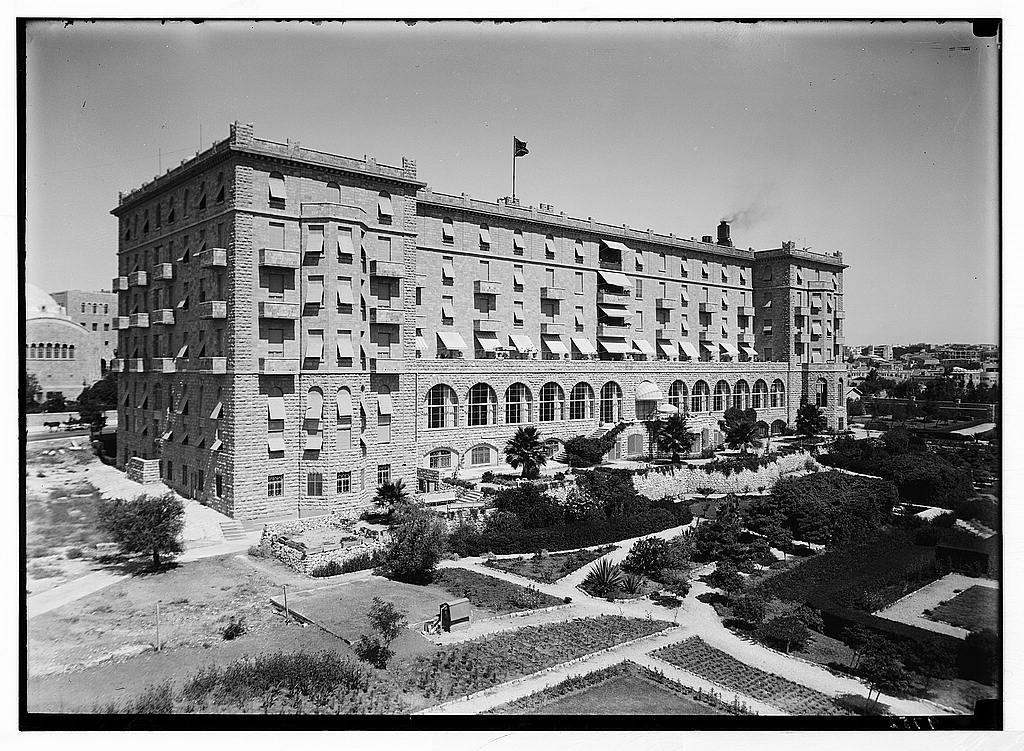


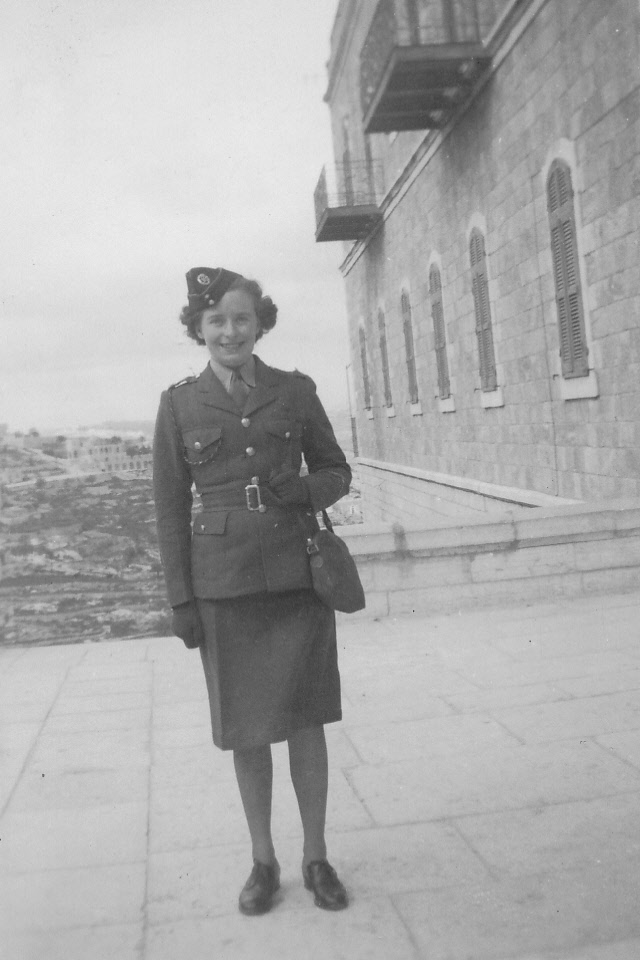


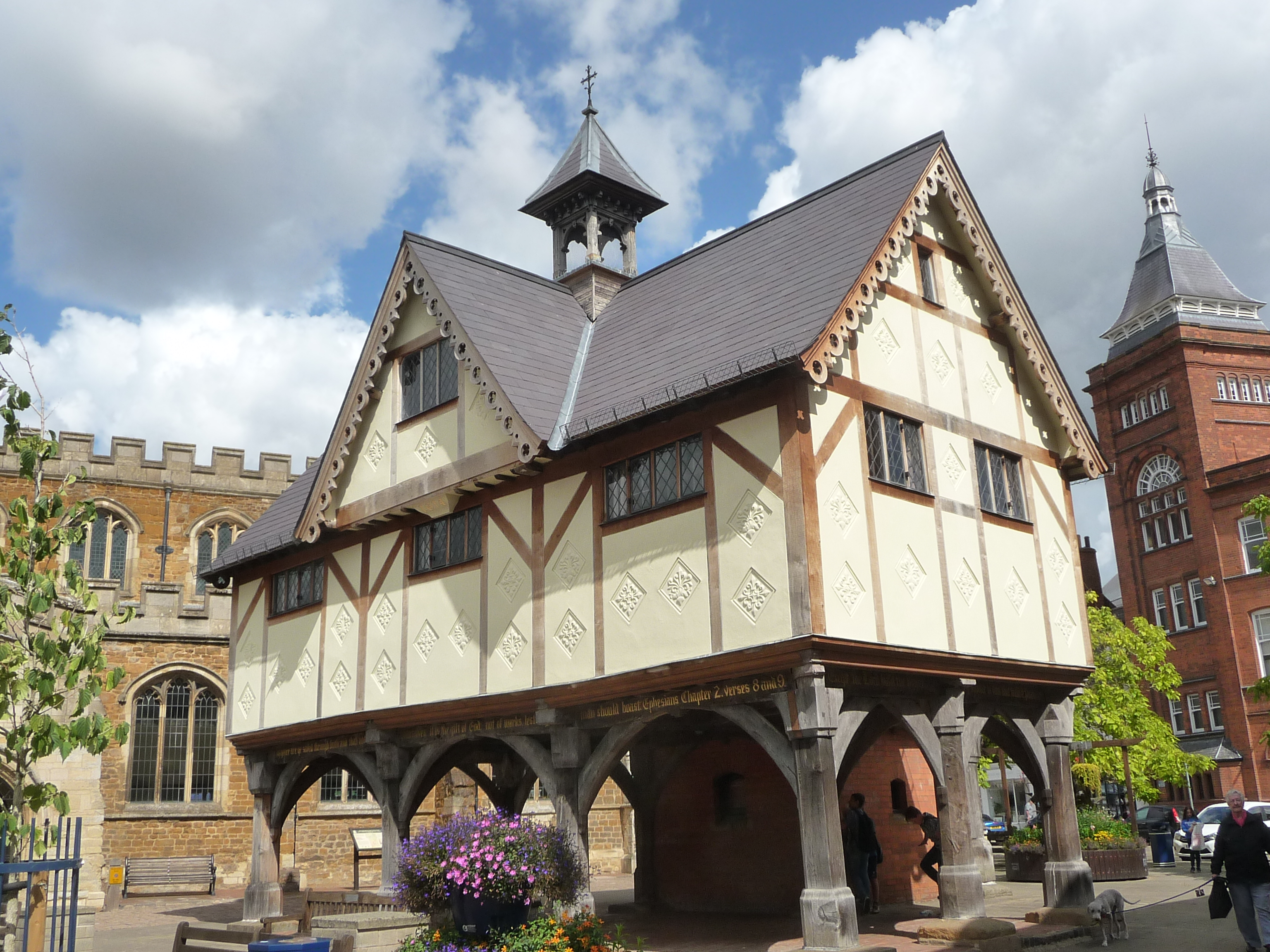


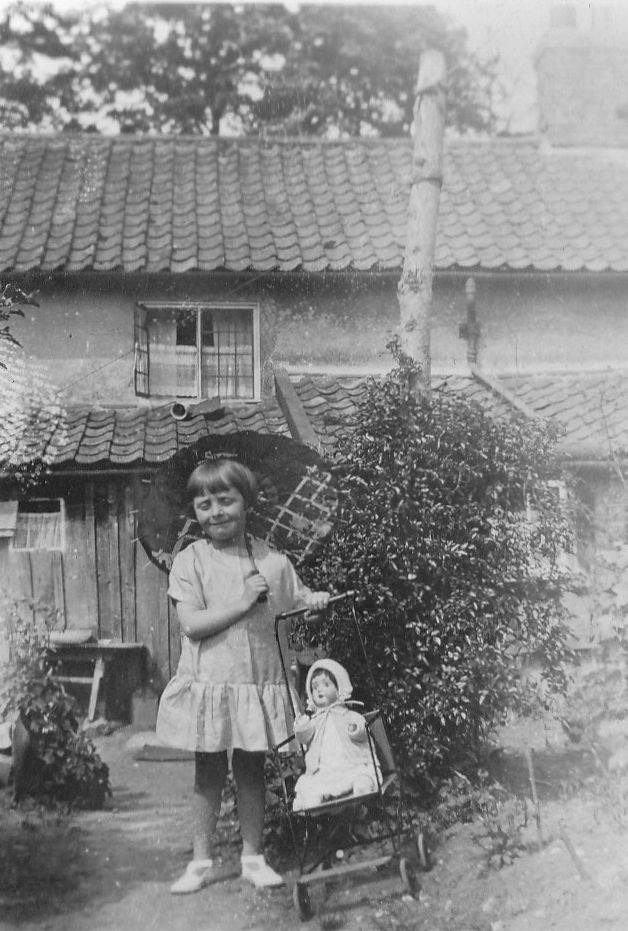

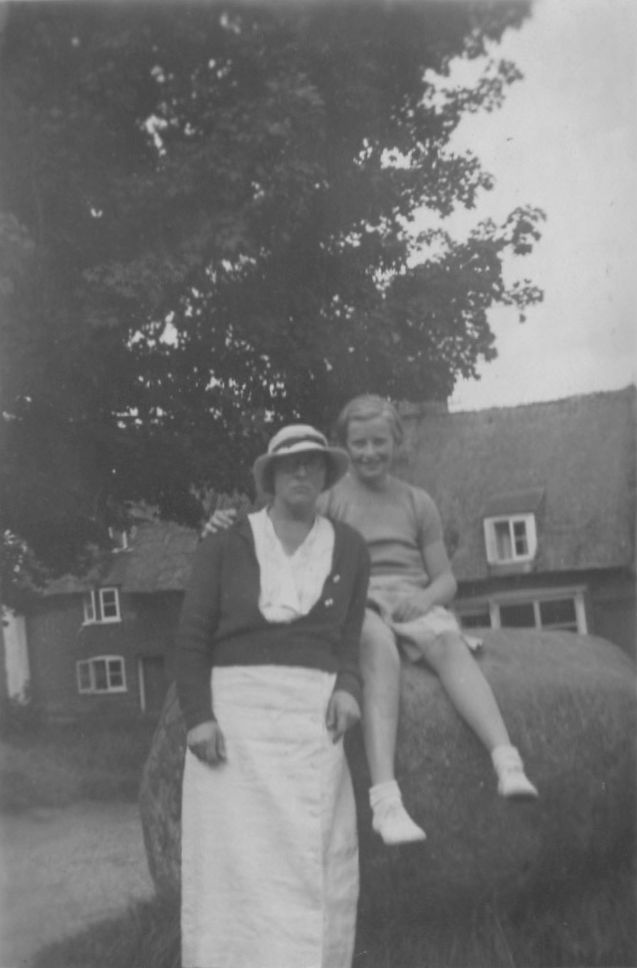
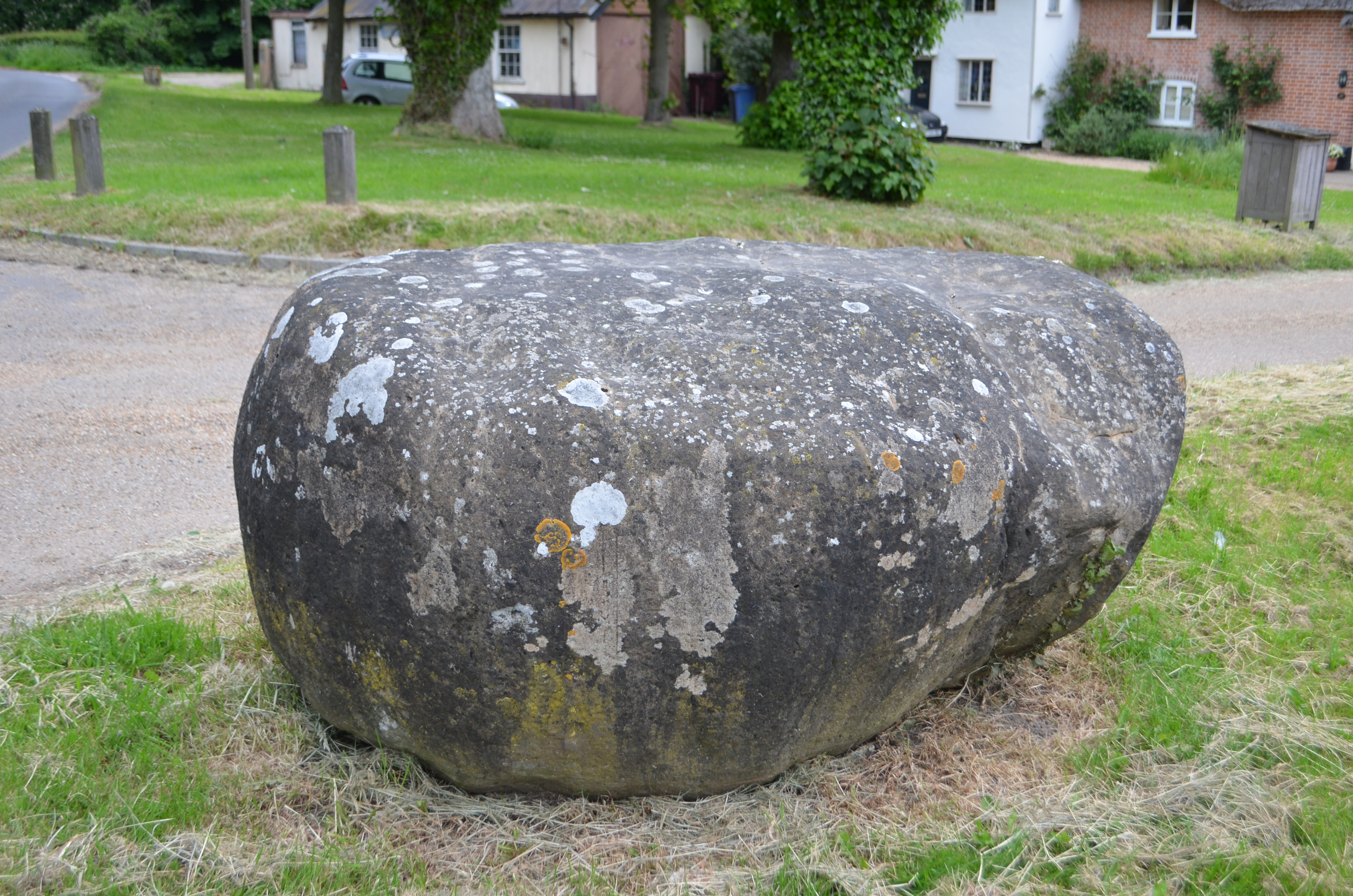


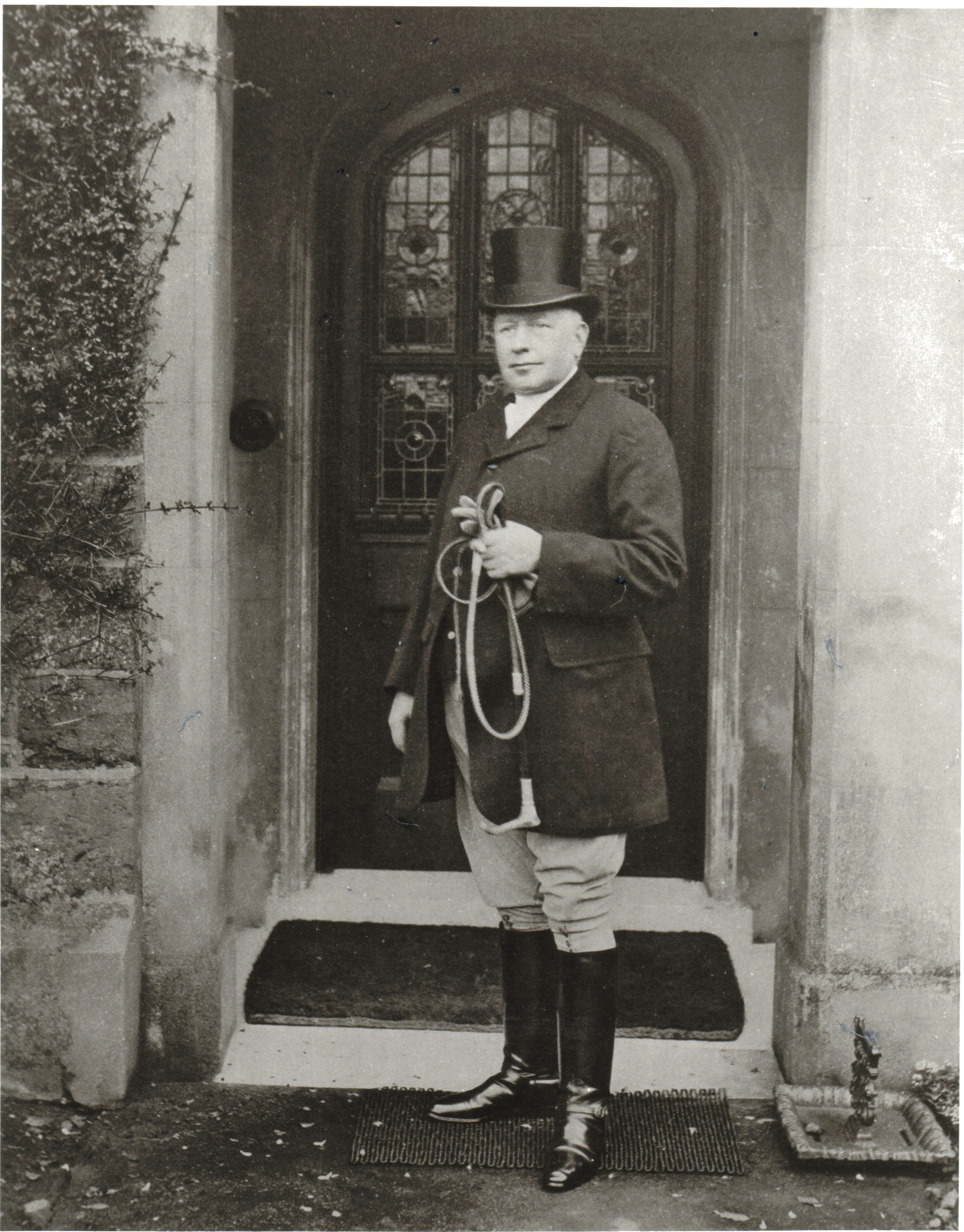

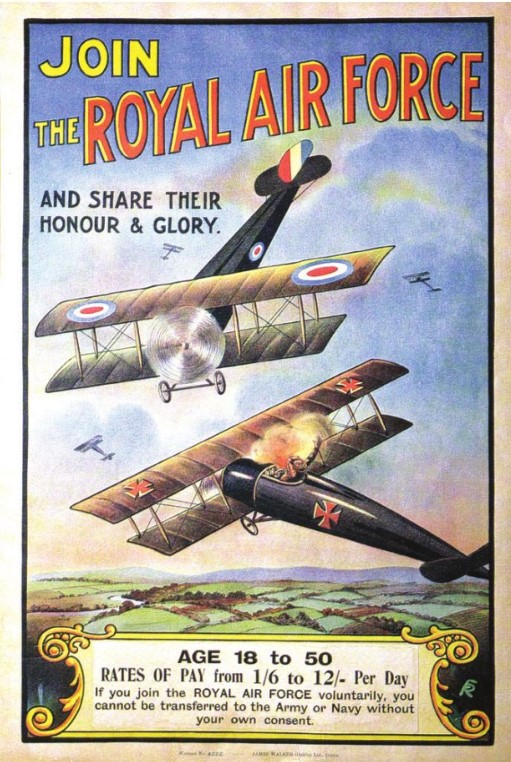
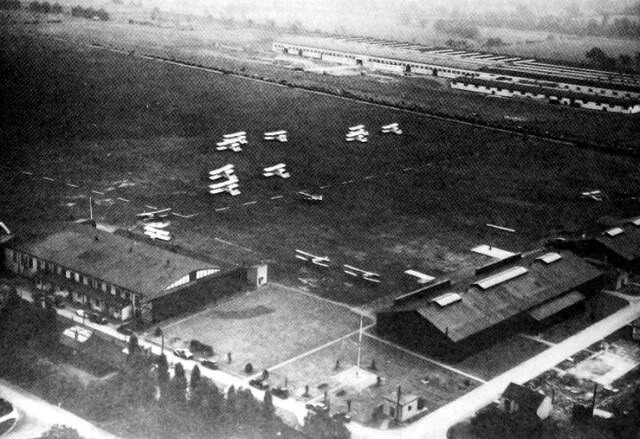


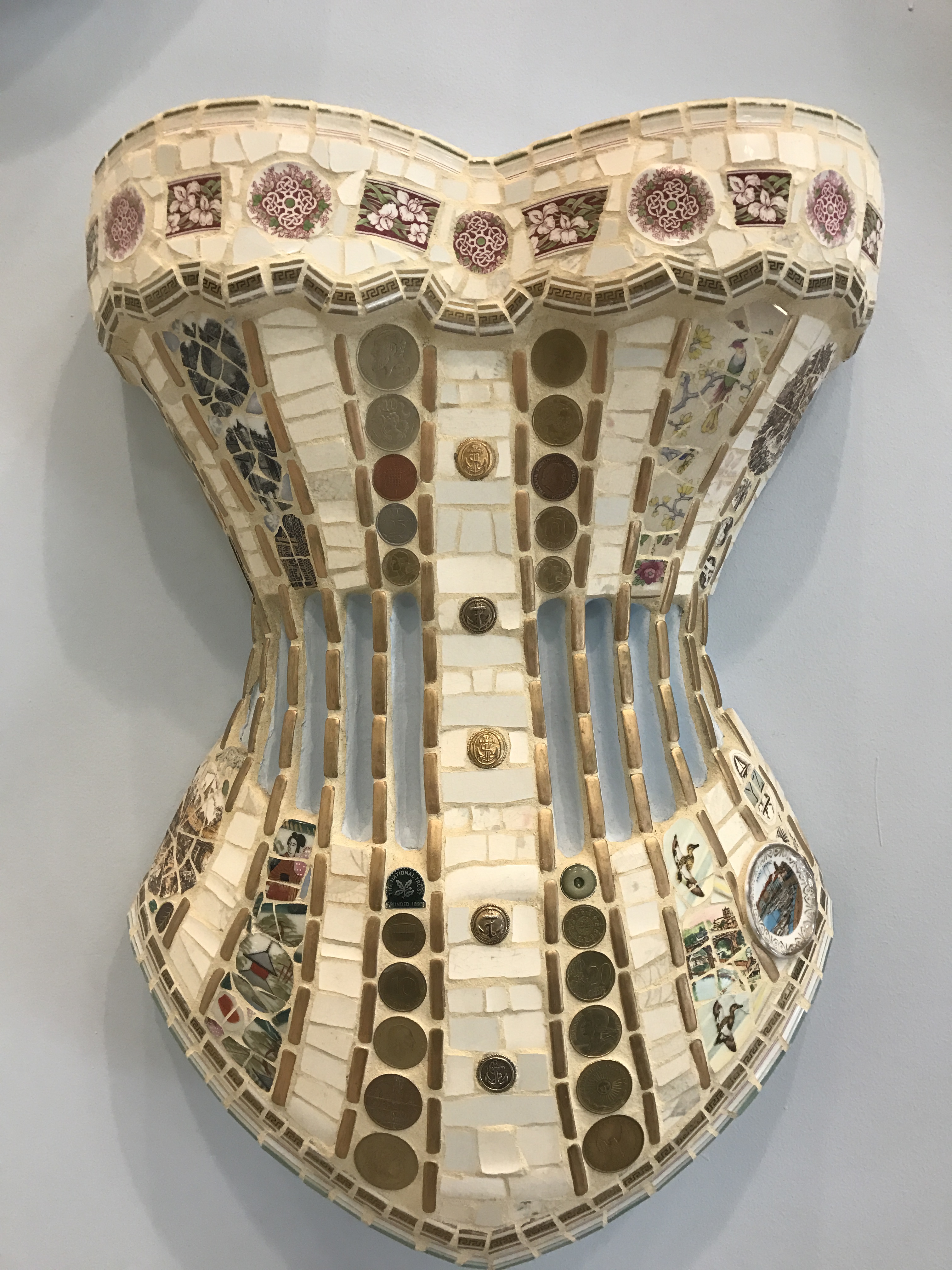
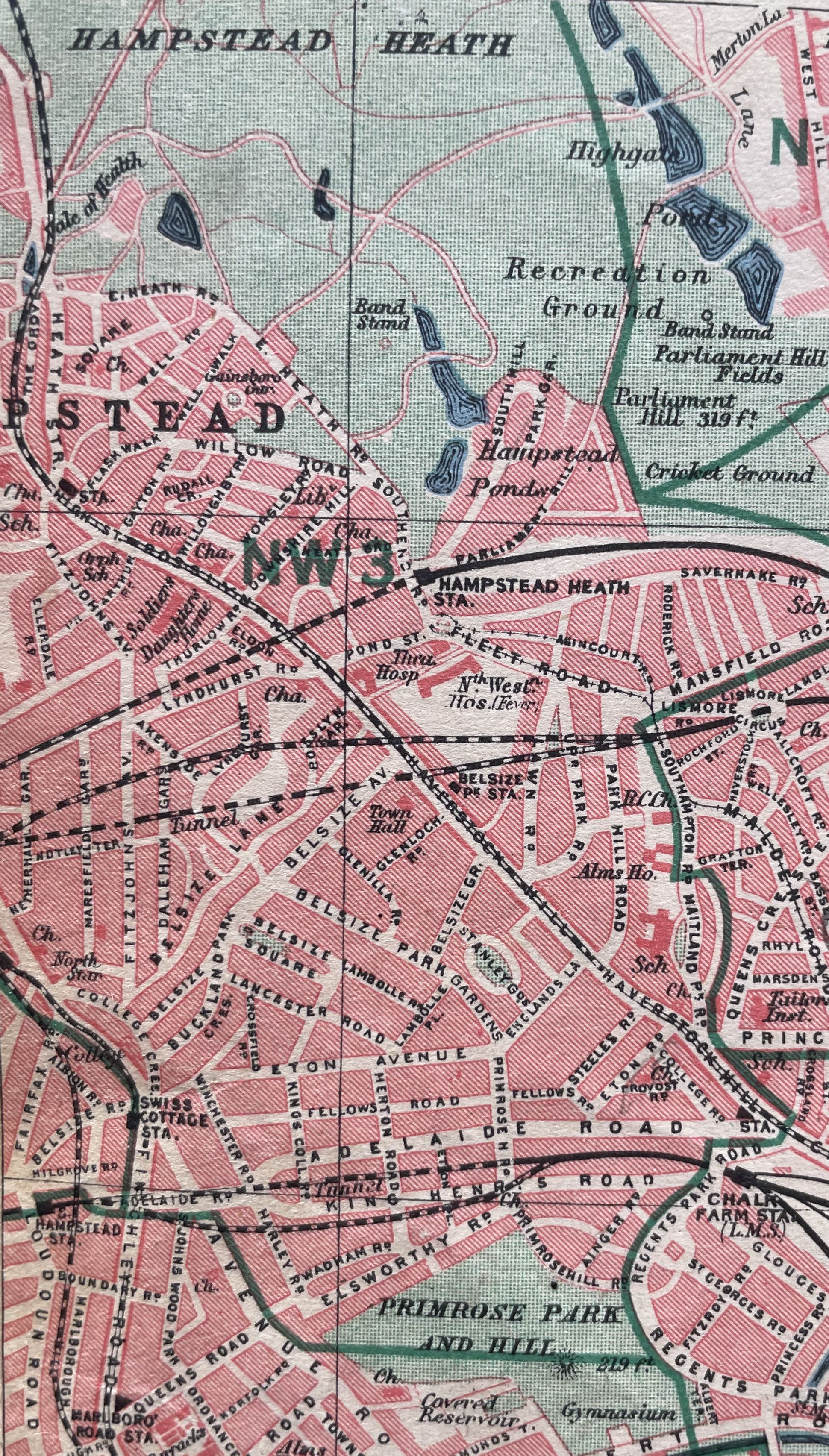

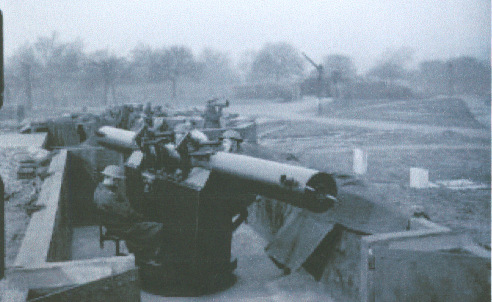

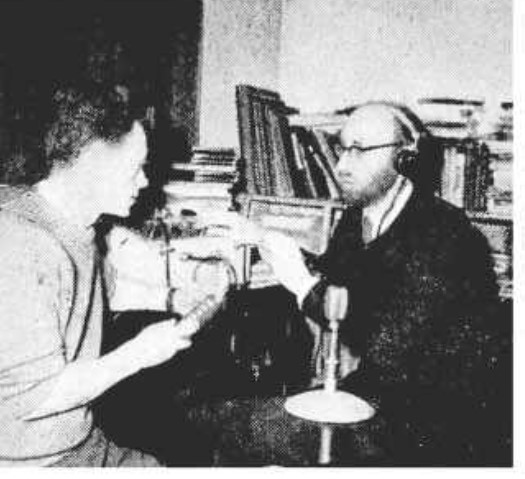
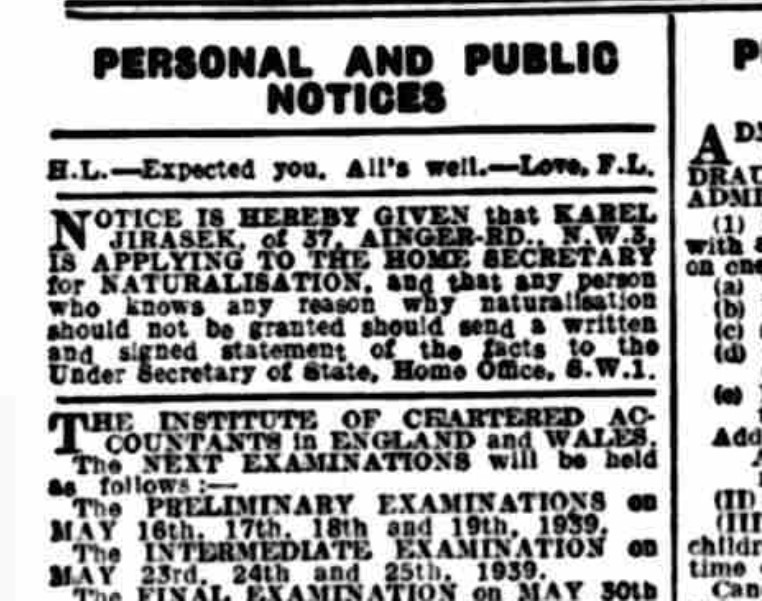


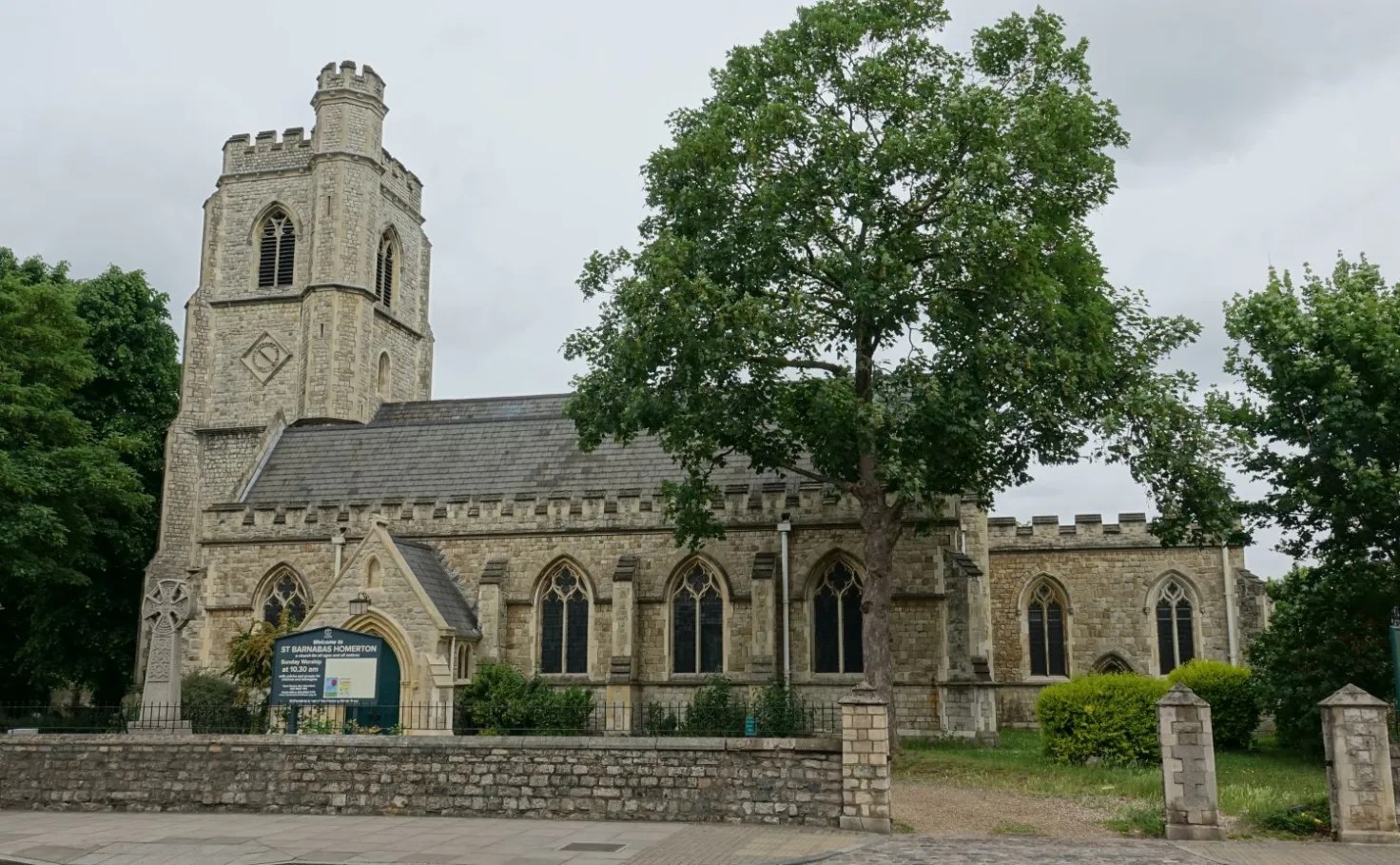
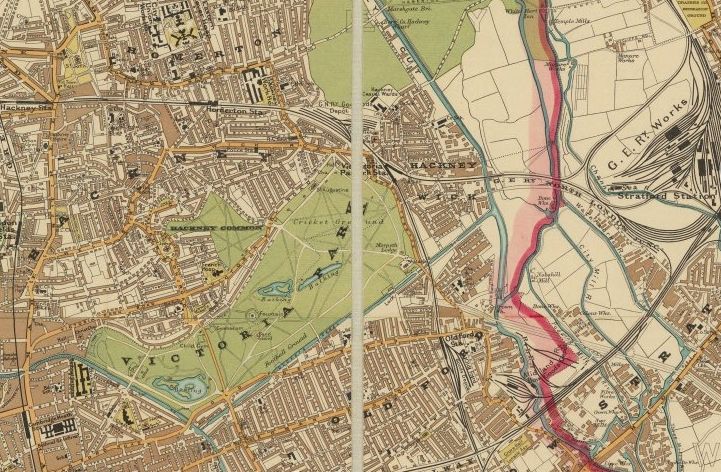
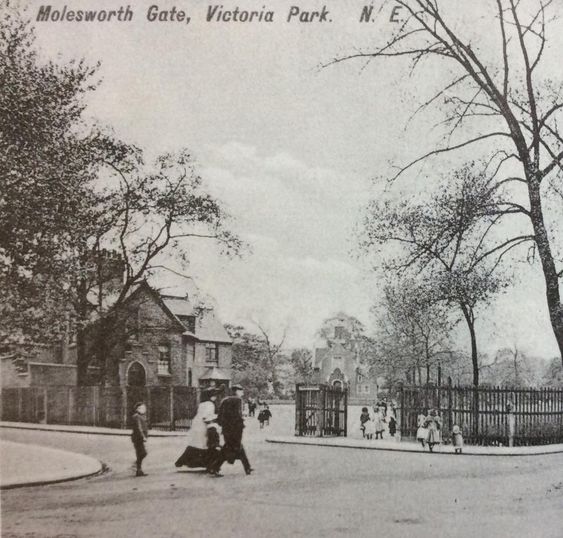


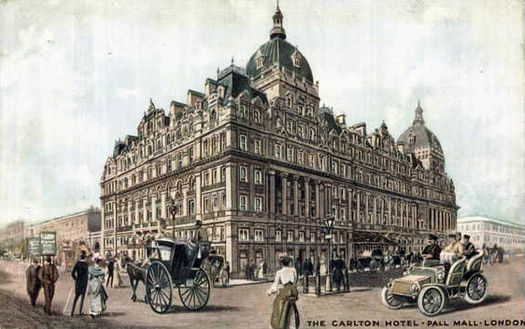


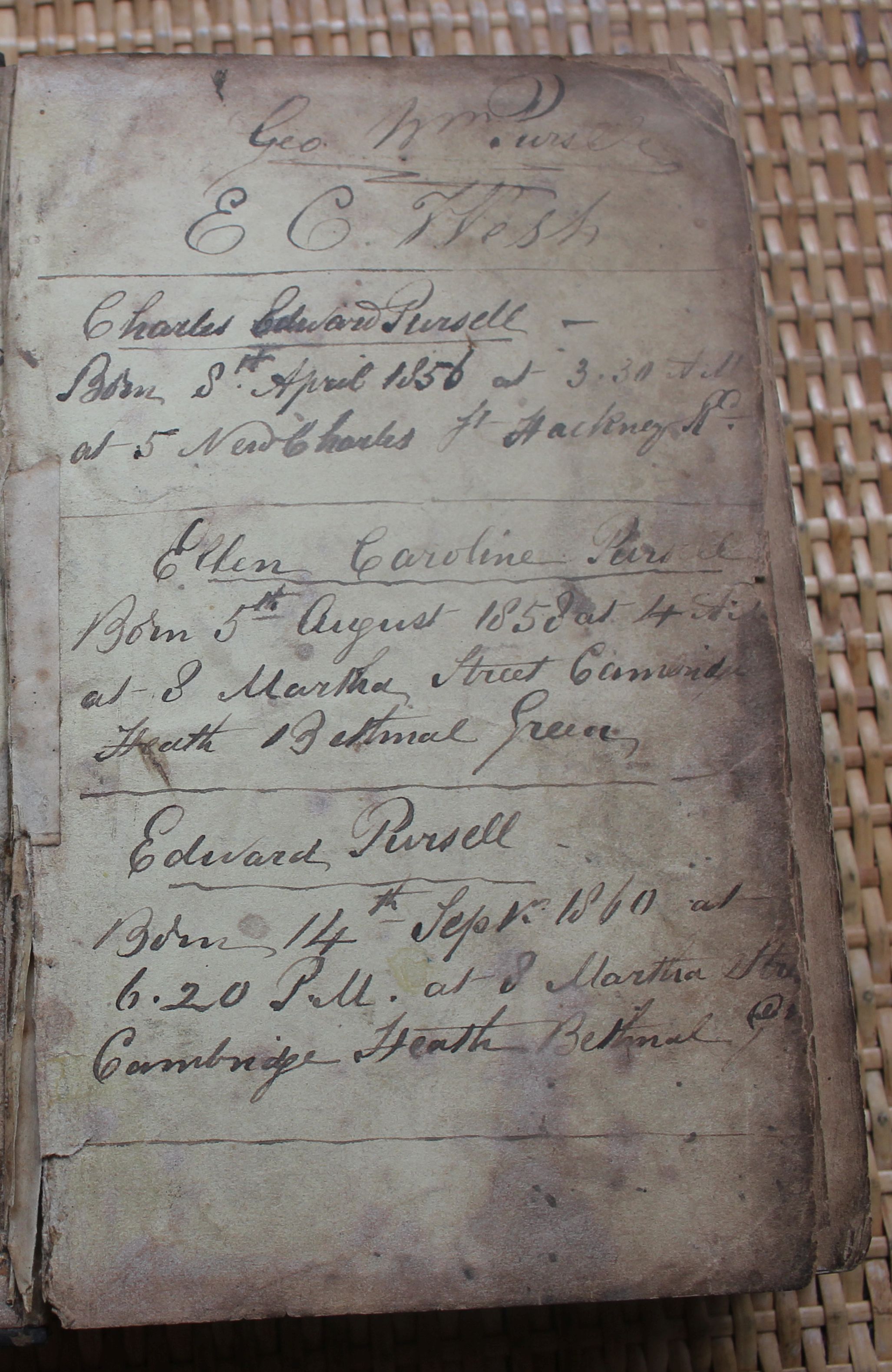


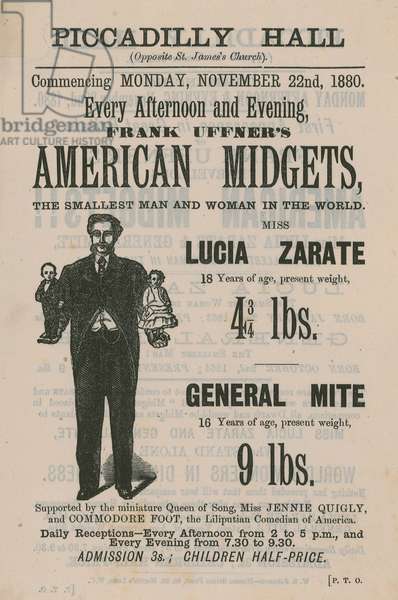

 The online family tree I’ve put together via
  Like all family histories, there’s tragic but also inspirational stories to tell. Which Cockrill was a London bobby in the very early days of the police force and had all his teeth knocked out in the line of duty? Which Pursell was among the over 400 men and boys on the HMS Captain who drowned when the ship capsized during a storm in the Bay of Biscay on 7 September 1870? And which direct member of our family ended her days in the Banstead Asylum in the late 19th century?
  Butchers, Bakers but No Candlestick Makers (so far)